Event Details
Malaysia SME Practical Forum: Cut Costs & Boost Sales with AI
Date: Wednesday, 29 April 2026
Time: 09:00 AM
Venue: Space 2 & 3, Level 2, Menara KEN TTDI, Kuala Lumpur
(Event has ended)
Event Recap: How SMEs Can Leverage AI to Cut Costs and Boost Sales
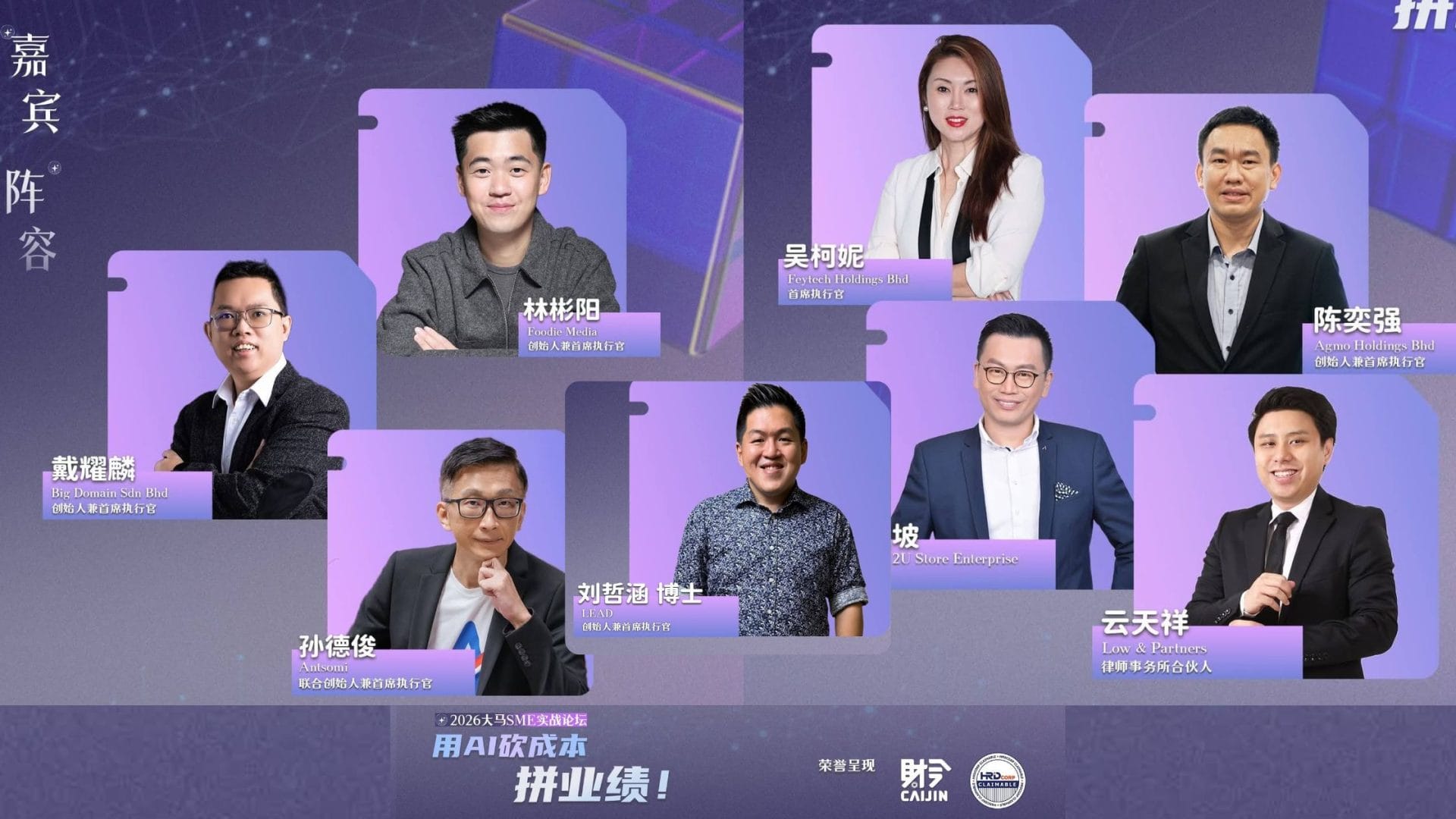
On April 29, 2026, the “BFM Malaysia SME Practical Forum 2026: Cut Costs & Boost Sales with AI,” organized byBFM, took place at Menara KEN TTDI in Kuala Lumpur. The event brought together AI practitioners and business leaders to discuss practical ways in which SMEs can utilise artificial intelligence to address marketing challenges, streamline internal operations, and manage associated risks.
The forum featured two in-depth panel discussions and a hands-on workshop. Here is a comprehensive breakdown of the key strategies and insights shared by the experts:
Panel 1: Shifting Traffic and Consumer Decision-Making
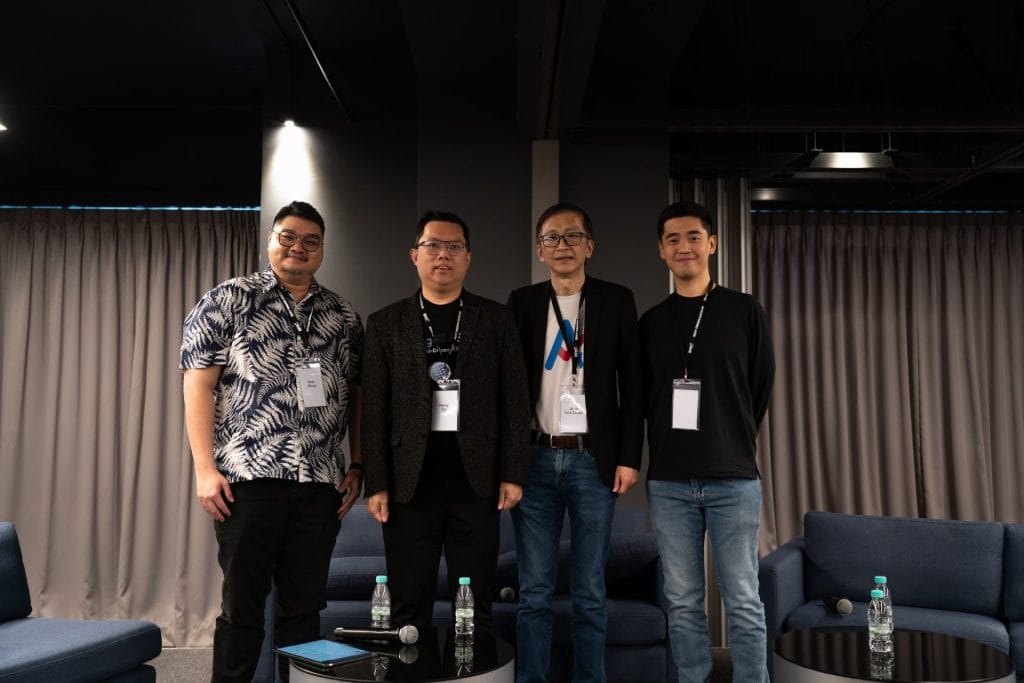
Isaac Wong, Henry Tye, Serm Teck Choon and Pinn Yang gathered after the “流量去哪了?” session at the 2026 大马SME实战论坛:用AI砍成本,拼业绩! The discussion covered traffic shifts, customer data, AI search and SME marketing strategies.
The first panel explored the drastic changes in consumer behaviour and how businesses can avoid wasting money on outdated advertising strategies.
Xiaohongshu, “Zero-Click” Searches, and Niche Targeting
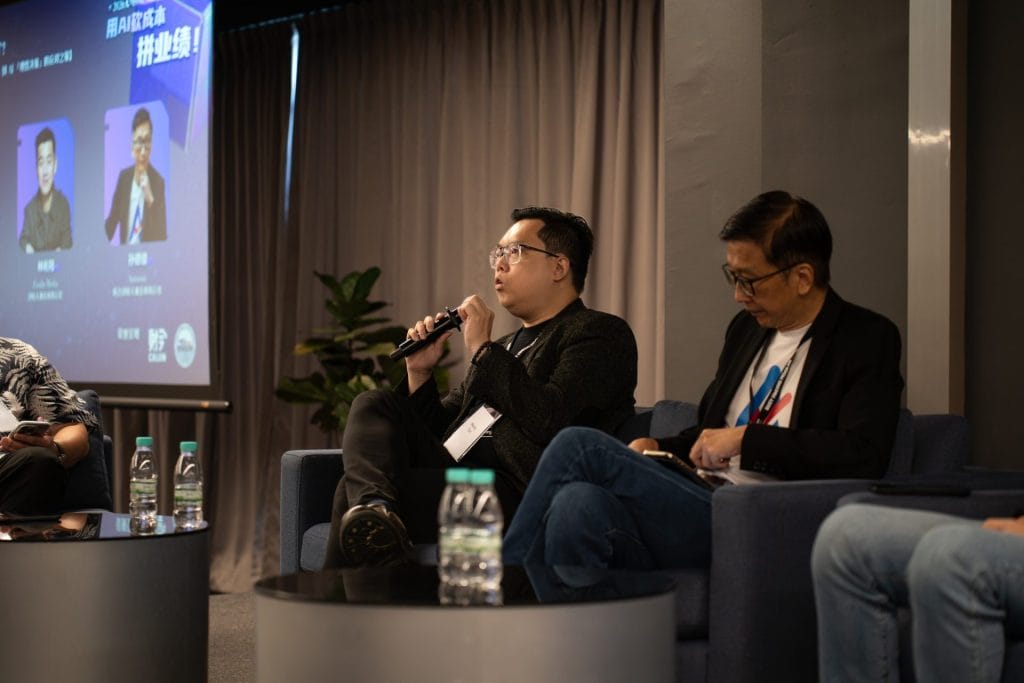
Henry Tye shares his views during Panel 1, “Where Did the Traffic Go?”, at the 2026 Malaysia SME Practical Forum. The session explored how AI search, customer data and changing consumer behaviour are reshaping SME marketing.
Henry Tye, Founder & CEO of BigDomain, highlighted the rising phenomenon of “Zero-click” searches, where users get their answers directly from AI or search engine summaries without ever clicking a website. To survive, businesses must adapt to AI Search Engine Optimization (GEO).
He also noted that Xiaohongshu represents a massive opportunity, combining 2.5 million Malaysian Chinese users with an expected 7 million Chinese tourists. However, the platform demands a “value-first” approach. Instead of hard-selling, brands should share authentic, behind-the-scenes knowledge (e.g., how to clean jewelry or avoid travel traps). To bypass fierce red-ocean competition, he advised targeting highly specific, long-tail keywords—such as focusing on “Michelin egg tarts” rather than just generic “egg tarts.”
The 1-Second Curiosity Hook and Matrix Operations
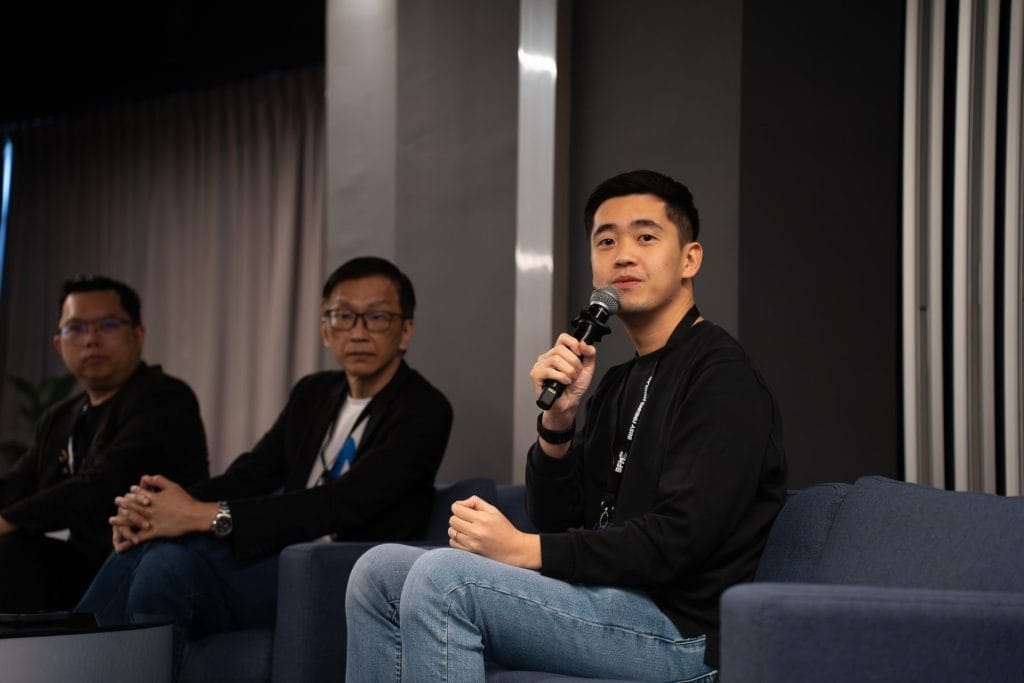
Pinn Yang shares insights during Panel 1 at the 2026 Malaysia SME Practical Forum. The discussion focused on changing consumer attention, short-form content, AI search and practical marketing strategies for SMEs.
Pinn Yang, Founder & CEO of Foodie Media, argued that the traditional “3-second rule” for short-form video has shrunk to one second or less. Success relies almost entirely on triggering pure curiosity immediately (e.g., “What do you do for a living?”).
He outlined an AI content factory approach: use AI to generate 50 script variations, filter down to the top 5, and use data prediction to find the highest converter. Furthermore, he recommended a diversified 30-30-30 budget allocation strategy: 30% for media buying, 30% for KOLs/creators, and 30% for building internal private traffic. He also stressed the importance of the Malay market on TikTok, noting that AI translation and digital avatars can now easily localize content to capture this demographic.
Building the 360-Degree Customer View
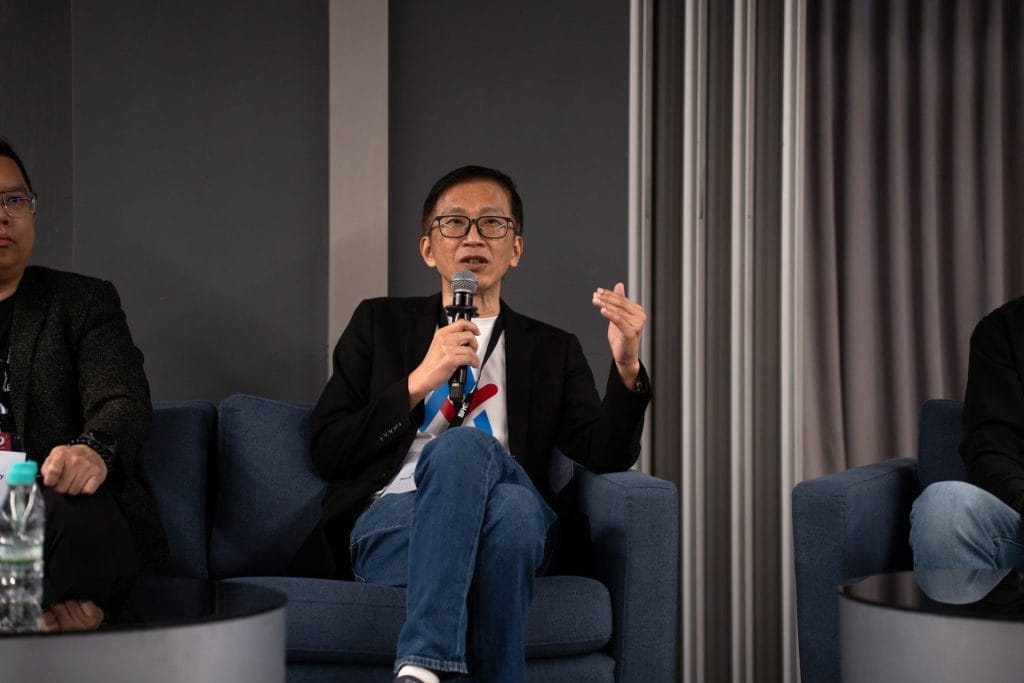
Serm Teck Choon of Antsomi shares insights during Panel 1 at the 2026 Malaysia SME Practical Forum. He discussed customer data, private traffic and how SMEs can use a Customer Data Platform to support more precise marketing.
Serm Teck Choon, Co-founder & CEO of Antsomi, mapped out the journey from data-driven to AI-driven, and finally to Agent-driven operations. He emphasized the critical need to convert public platform traffic into private domain data.
Sharing an example of a shoe retailer, he explained how integrating POS systems, e-commerce, and membership data into a Customer Data Platform (CDP) allows for predictive analysis and highly personalized “thousands of faces” marketing. However, he cautioned that businesses must maintain transparency—customers should always be informed when they are interacting with AI, preserving the human touch for complex, emotionally nuanced problem-solving.
Panel 2: The Boss’s AI Calculator – Efficiency and Risk Control
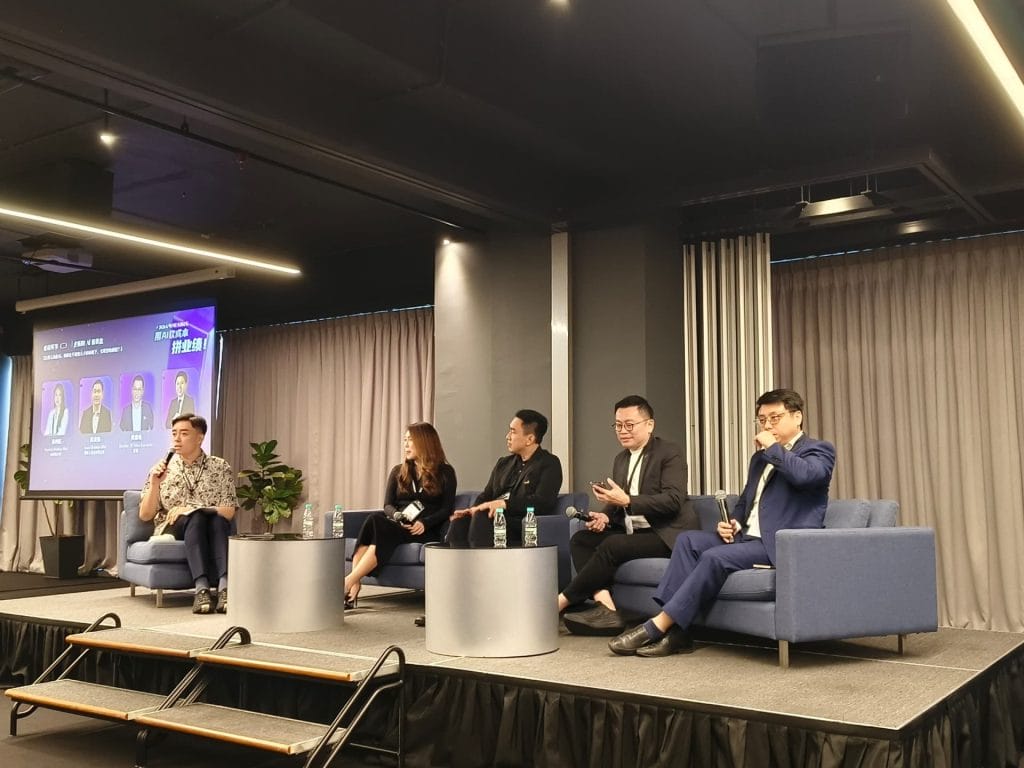
The second panel shifted focus to internal operations, exploring how AI can drastically reduce overhead, alongside the legal and security frameworks necessary to deploy it safely.
From Generative to Agentic AI and Prompt Mastery
Mr Tan Aik Keong, Founder & CEO of AGMO Holdings Berhad, urged users to move beyond basic prompting. He recommended utilizing structured frameworks like CARE, COSTAR (Context, Objective, Style, Tone, Audience, Response), and RISE (Role, Instruction, Steps, Expectation) for superior outputs.
More importantly, he highlighted the industry’s shift toward “Agentic AI.” Instead of just generating text, Agentic AI (like Open Interpreter) is given a goal and acts autonomously—reasoning, planning, and interacting with computer systems, emails, and calendars to complete complex workflows. To manage this internally, he suggested companies build “Prompt Libraries” and enforce strict AI governance to prevent unauthorized “Shadow AI” usage.
Drastic Administrative Efficiency vs. The Echo Chamber
Connie Go, CEO and Non-Independent Executive Director of FeyTech Holdings Bhd, shared a striking practical success story: her company utilized AI to draft complex, cross-lingual memos (translating effortlessly into Malay, English, Bengali, and Burmese) in seconds. This efficiency was so profound that her team was able to operate smoothly without replacing a departed HR manager.
However, she issued a strong philosophical warning regarding AI “Echo Chambers.” Because algorithms cater strictly to user biases, they can create polarized worldviews (e.g., EV vs. petrol car debates). Users and businesses must remain critical and not be blindly led by AI’s continuous prompting. She also emphasized highly restricting open-source AI tools internally to protect proprietary company databases from leaks.
Hyper-Localized Copywriting and Copyright-Free Assets
Steven, Director of Easybuy 2U Store Enterprise, recommended Gemini Advanced for B2C market research due to its integration with real-time search data. For copywriting, he stressed the importance of hyper-localization. Prompts must explicitly instruct the AI to use local contexts (e.g., requesting “Malaysian Chinese phrasing” rather than mainland jargon) and to speak like a human resolving a specific pain point. To address the common issue of social media platforms taking down videos for copyright infringement, he recommended tools like SUNO AI to generate original, copyright-free background music.
Navigating the Legal Boundaries of AI
Andrew, Partner at Low & Partners, laid out three strict legal guidelines for corporate AI adoption:
PDPA Compliance: Personal data must be entirely sanitized and removed before uploading any documents or databases to public AI platforms.
Intellectual Property: Uploading third-party documents (such as auditor reports) can infringe on the creator’s IP. Furthermore, businesses must carefully check the Terms & Conditions of AI platforms to ensure they actually own the commercial rights to the generated outputs.
The “AI Trail”: Every company must establish clear AI policies and maintain an audit trail of how employees use these tools. In the event of a copyright dispute or legal issue, this documented trail serves as critical evidence that the company acted ethically and within legal boundaries.
Workshop: Building an Automated WhatsApp Sales Assistant
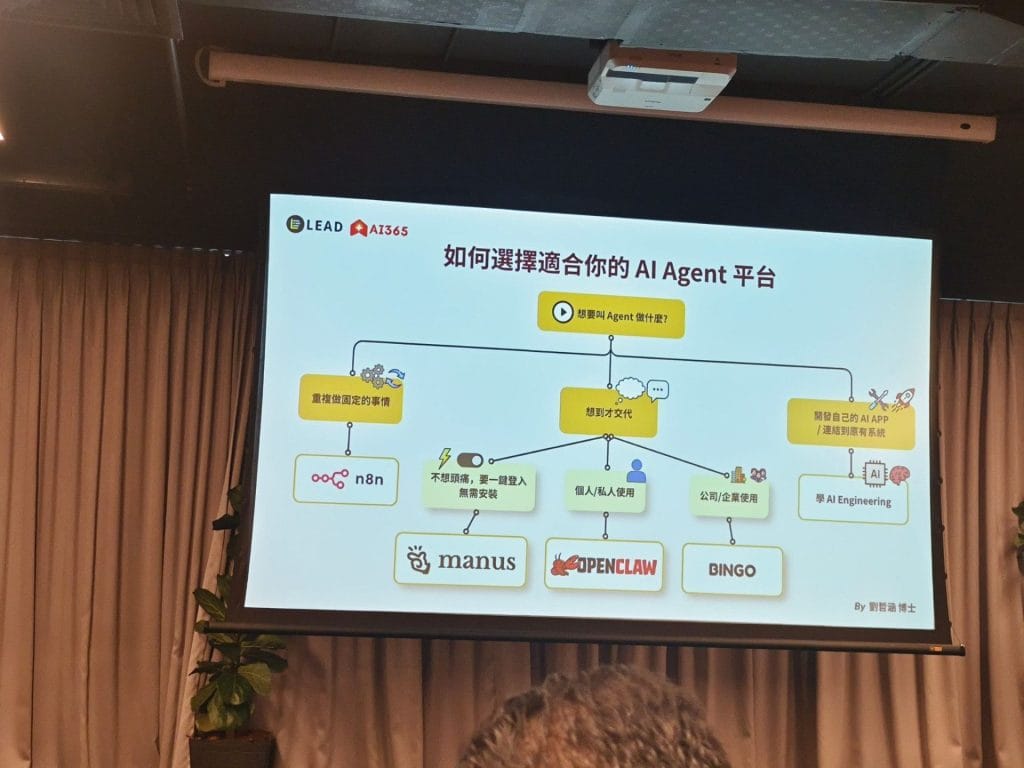
The event concluded with a highly interactive, hands-on workshop led by Dr. Lau Cher Han, Founder & CEO of LEAD.
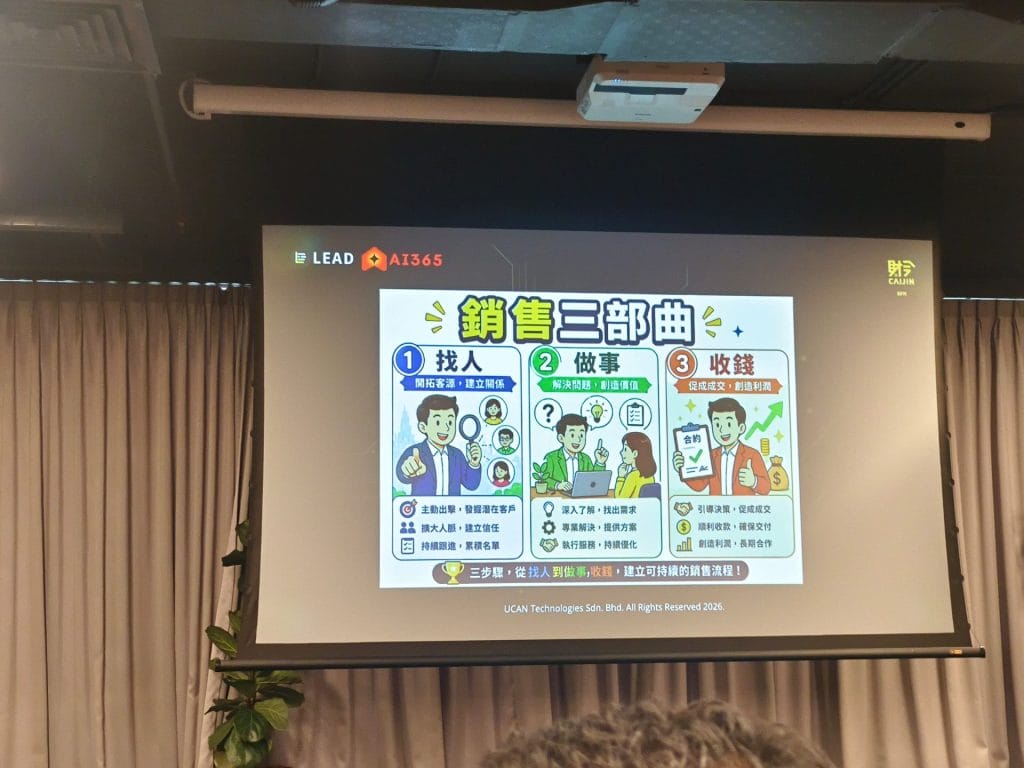
Recognizing that a massive portion of Malaysian business is conducted via WhatsApp, Dr. Lau guided participants through building their own “24/7 Gold-Medal Sales Assistant.” Attendees learned how to feed their company’s FAQs and pricing sheets into an AI system. The workshop specifically focused on programming the AI to handle difficult objections—such as “Why are you more expensive than competitors?”—with high emotional intelligence. Participants also learned how to set up automated follow-ups to re-engage customers who leave messages “read but unreplied” after 24 hours, ensuring no lead slips through the cracks.
Conclusion
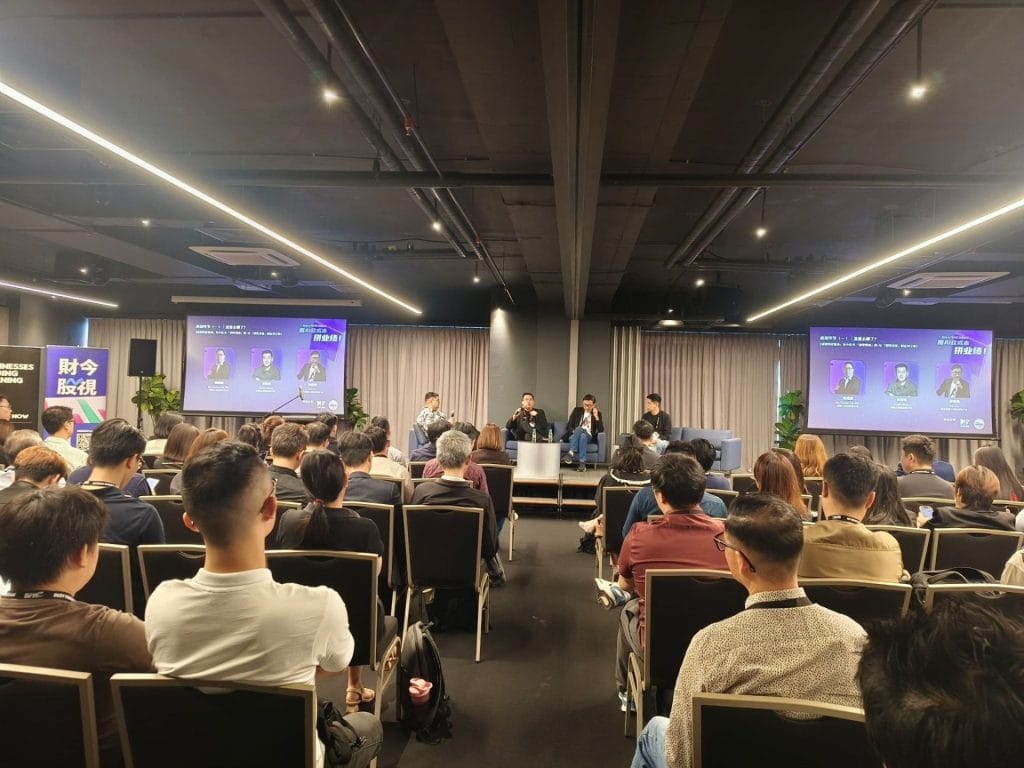
The 2026 Malaysia SME Practical Forum drew a full room of business owners and SME leaders. Speakers discussed AI search, short-form content, customer data and changing consumer behaviour.
The “Malaysia SME Practical Forum” made one thing abundantly clear: AI is no longer a futuristic concept reserved for tech giants; it is an immediate, actionable tool for SMEs to level the playing field. By combining hyper-targeted content strategies, autonomous Agentic AI workflows, and robust data security policies, businesses can significantly cut operational costs while unlocking new avenues for growth in an increasingly competitive landscape.
【中文摘要与核心总结】
由 BFM主办 的备受瞩目的 「大马SME实战论坛:用AI砍成本拼业绩」,已于 2026年4月29日(星期三)早上 09:00 在吉隆坡 Menara KEN TTDI (Space 2 & 3, Level 2) 成功举办。本次盛会不仅为马来西亚中小企业带来了前沿的人工智能商业洞察,更提供了切实可行的数字化转型与中小企业AI转型落地指南。
- 流量重塑与私域成交
在流量见顶与获客成本飙升的当下,企业必须跳出传统的广告投放思维。正如 BigDomain 创办人兼首席执行官 Henry Tye 所强调,企业应转向以“零点击(Zero-click)”搜索和小红书SEO(生成式引擎优化 (GEO))“种草”为核心的精细化运营。Foodie Media 创办人兼首席执行官 Pinn Yang 指出,通过结合 AI 工具矩阵批量生成多样化文案,利用数据测试精准捕捉用户的黄金一秒注意力,企业能够有效降低营销支出。同时,Antsomi 联合创办人兼首席执行官 Serm Teck Choon 建议借助客户数据平台 (CDP),将公域流量转化为高粘性的私域流量池,实现千人千面的精准营销。 - 降本增效与代理式 AI
在企业内部运营层面,AI 应用已从简单的“生成式”迈向更高级的代理式AI (Agentic AI)。AGMO Holdings Berhad 创办人兼首席执行官陈奕强先生(Mr. Tan Aik Keong)深入解析了如何利用框架提升指令效果;FeyTech Holdings Bhd 首席执行官兼非独立执行董事 Connie Go 则分享了如何通过构建提示词工程 (Prompt Engineering) 与内部提示词库大幅削减行政与人力资源成本。Easybuy 2U Store Enterprise 总监 Steven 也补充道,在市场调研与文案创作中,利用 AI 的本地化语境至关重要。善用这些工具,企业能通过自动化工作流实现真正的降本增效。 - 数据安全与法律合规
在享受 AI 带来高效红利的同时,企业家必须严守法律与数据安全的底线。Low & Partners 合伙人 Andrew 提醒,在将任何商业数据输入 AI 平台前,务必彻底清除个人敏感信息,严格遵守数据隐私保护 (PDPA) 法规,并防范潜在的知识产权侵权风险。建立完善的企业内部 AI使用记录 (AI Trail) 是保护商业机密与规避法律纠纷的关键。 - 自动化销售系统实战
此外,由 LEAD 创办人兼首席执行官刘哲涵博士(Dr. Lau Cher Han)带领的实战工作坊搭建的 WhatsApp自动化营销客服系统,向与会者证明了 AI 完全能够化身为“24小时不打烊的金牌销售”。无论是处理高情商的议价谈判,还是针对“已读不回”客户的自动跟进,AI 都在帮助企业以极低的成本重塑转化率。拥抱 AI,真正做到用AI砍成本拼业绩,已成为大马 SME 在激烈的市场竞争中实现破局的必经之路。