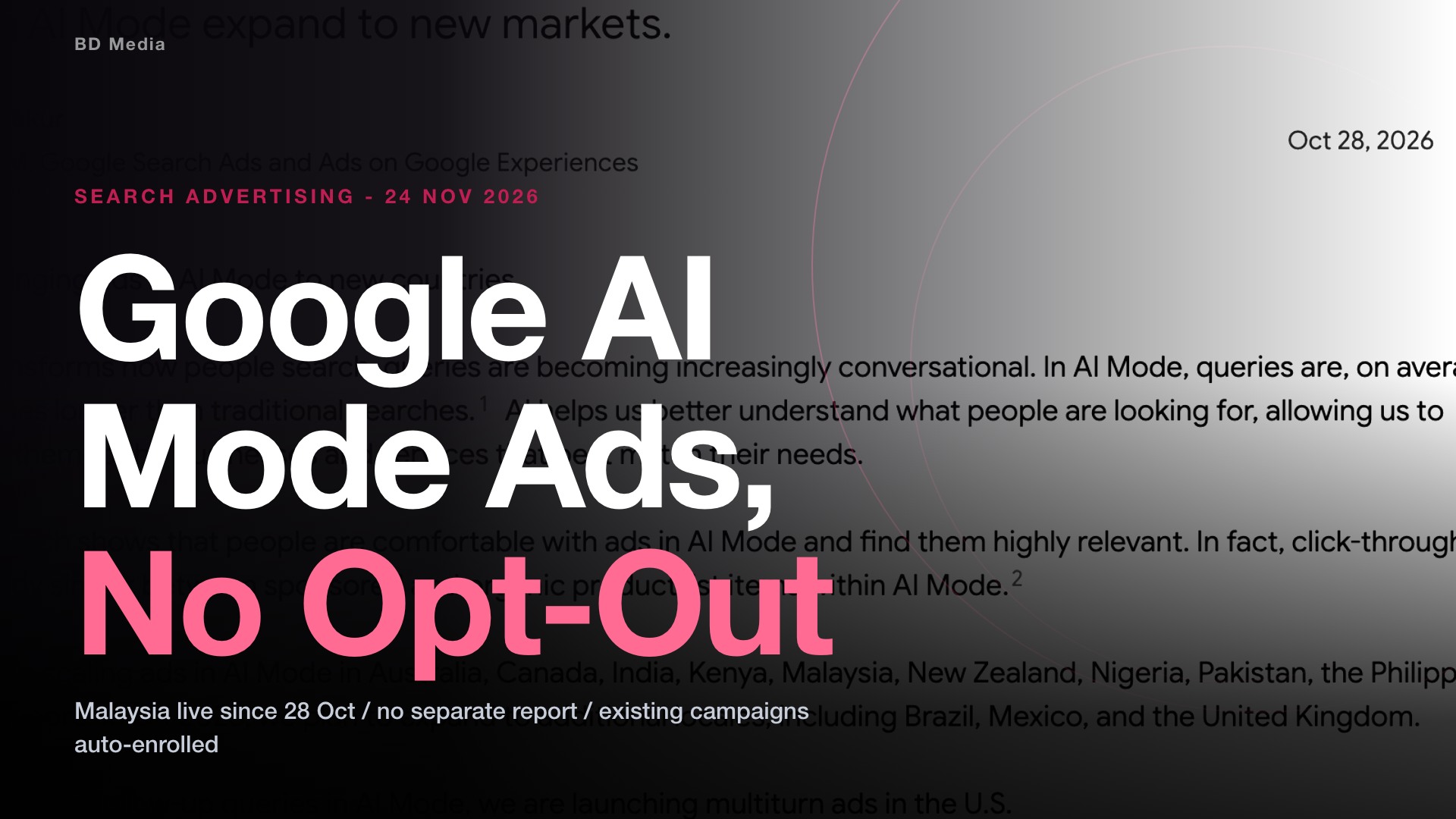
KUALA LUMPUR, 24 November 2026 — Google AI Mode now carries advertising in Malaysia, and a Malaysian advertiser cannot switch it off. The expansion was announced on Alphabet’s earnings call on 28 October and restated by Google’s Ads account on 9 November, naming ten markets: Australia, Canada, India, Kenya, Malaysia, New Zealand, Nigeria, Pakistan, the Philippines and Singapore. Existing Search, Shopping and Performance Max campaigns are eligible automatically. There is no separate campaign to build, no budget line to add, and no setting that excludes the surface.
That last point is the one a business owner should read twice. For a Malaysian SME this is not a new product to evaluate; it is a new place for existing spend to appear, introduced in a month when most accounts were already running.
What Changed In Google AI Mode For Malaysia?
Three things, and only the first is being reported widely.
| Change | When | What it means for a Malaysian account |
|---|---|---|
| Ads in AI Mode expanded to Malaysia and nine other markets | 28 October 2026, restated 9 November | Text and Shopping ads can appear inside or beside an AI answer, drawn from campaigns already running |
| No opt-out and no separate campaign | Same announcement | Pausing Performance Max to avoid the surface also removes traffic that still converts; a targeted exclusion does not exist |
| Multiturn ads on follow-up questions | United States only | Not live in Malaysia. The format here is the answer-surface placement, not the follow-up one |
The operational detail matters more than the announcement, and it was reported by Search Engine Journal on the same update: AI Mode impressions, clicks, conversions and cost are folded into existing campaign reports, and search terms are aggregated with everything else. A Malaysian advertiser cannot produce an AI Mode cost per acquisition or return on ad spend. The traffic is real and unattributable at the same time.
Why Can’t A Business See What AI Mode Spend Did?
Because Google reports the surface inside the campaign rather than beside it. An account can improve while AI Mode underperforms, or the reverse, and the monthly report shows one blended number either way.
That is not a reason to stop advertising. It is a reason to change what gets checked weekly, and two habits do most of the work.
Read the search terms, not the averages. AI Mode questions are longer and more conversational than keyword searches: a paragraph instead of three words, with follow-ups that narrow it. A blended click-through rate hides whether the long questions produce enquiries or only impressions. The search terms report is aggregated, so the reading is directional rather than exact, and directional is enough to spot a category of question that never converts.
Count signed business, not platform numbers. When a surface cannot be isolated, the only honest measure is the one that reaches the invoice: quotations issued, jobs booked, revenue by channel. A business that reports on those survives a platform change; one that reports on impressions cannot tell whether the change helped.
Does This Change What A Malaysian SME Should Publish?
Yes, and it is the part an SME controls. A Google AI Mode answer is assembled from pages, and the page that gets used is the one that answers a sub-question clearly. Google’s 12 November upgrade, which put the Gemini 4 Hydrogen model behind Search worldwide, extended query fan-out: one long question is decomposed into several searches, and the answer is built from what those searches return, as Google’s Search blog describes it.
For a Malaysian business that means three page-level habits, none of which needs a new tool: state the price, the location and the hours in plain sentences rather than inside an image; answer the follow-up question on the same page instead of in a PDF; and keep dated facts current, because an answer assembled from last year’s price is wrong in a way the reader can see.
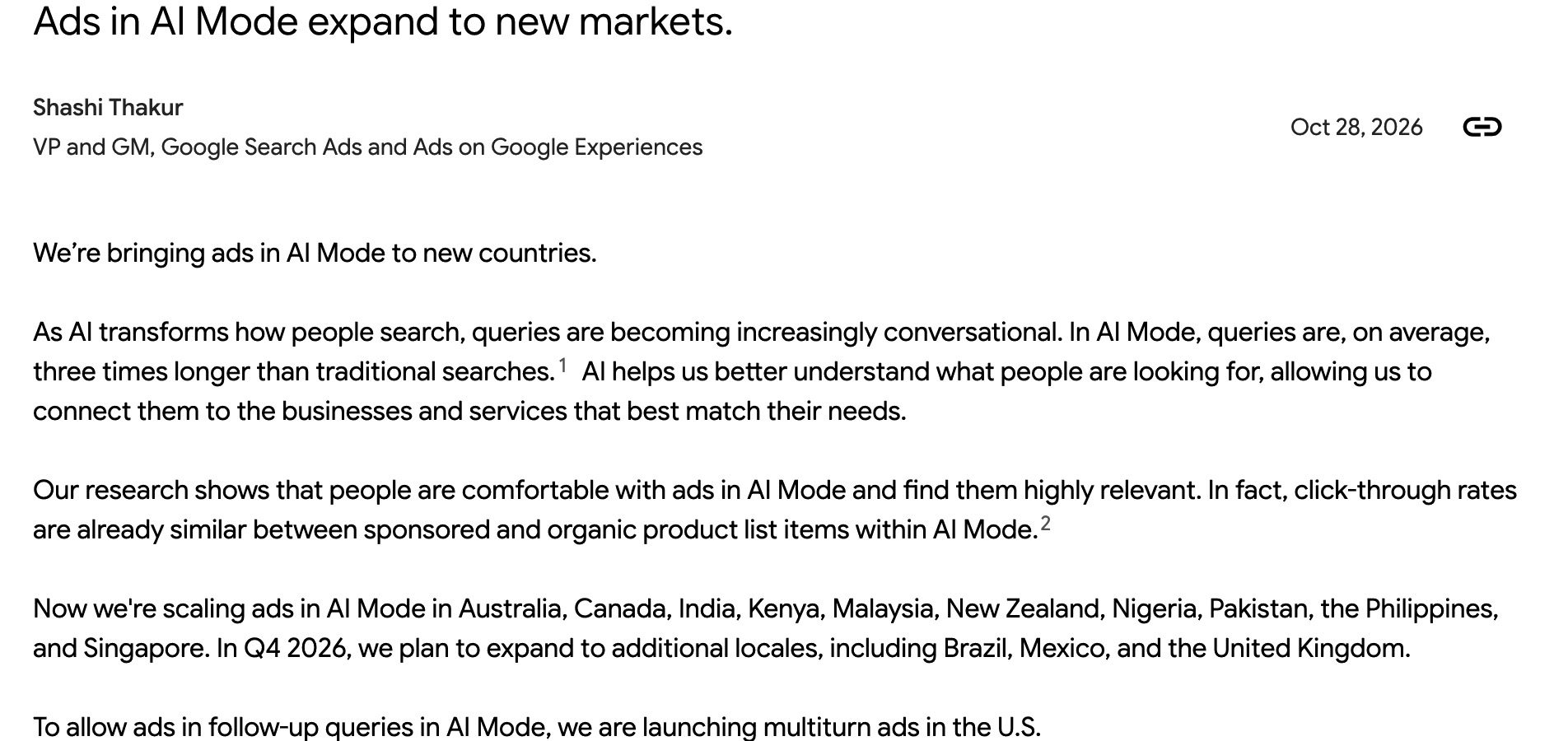
The 28 October announcement naming Malaysia among the ten markets and stating that AI Mode queries run about three times longer than traditional searches. Source: Google Ads and Commerce blog, https://blog.google/products/ads-commerce/ads-in-ai-mode-global/, captured 24 November 2026.
What Should An Advertiser Do This Week?
Four moves, in order of cost.
1. Do not restructure the campaign yet. Switching off Performance Max to avoid AI Mode also switches off the sales it still produces. The exclusion does not exist; the traffic does.
2. Fix the feed and the landing page before the budget. Shopping ads inside an answer draw on product titles, attributes and prices. A feed missing size, material or model cannot match a conversational question, and no amount of spend fixes a title that says nothing.
3. Test one long-question campaign. Broad match or AI Max with smart bidding, on one campaign, for thirty days. Long questions rarely match a short keyword list, which is the mechanic that decides whether an account enters these answers at all.
4. Set the baseline this month. Record enquiries, quotations and revenue per channel before December. In a quarter where the platform cannot isolate a surface, the business that kept its own baseline is the only one able to say what changed.
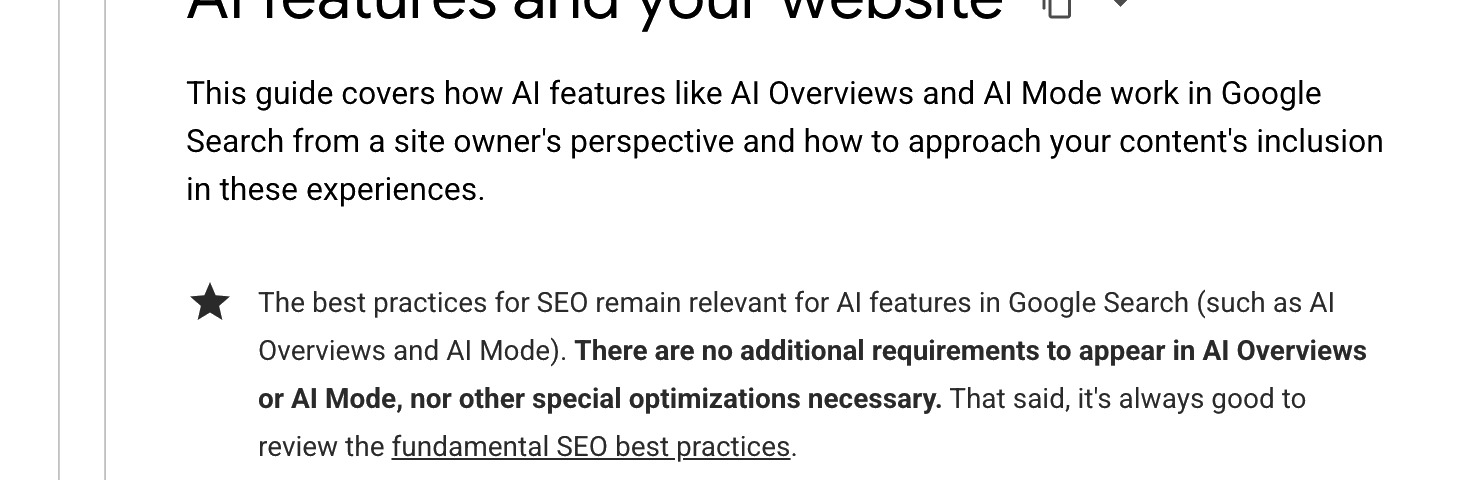
Google’s own documentation on AI features in Search, which states that AI appearances are counted inside the normal performance report and that no special markup is required to appear. Source: Google Search Central, https://developers.google.com/search/docs/appearance/ai-features, captured 24 November 2026.
Last updated: 24 November 2026. Announcement dates and market list from Google’s Ads and Commerce blog (28 October 2026) and Google’s Ads account (9 November 2026); the reporting limitation as described in Search Engine Journal’s coverage of the same update. Model change from Google’s Search blog (12 November 2026). Full source register held with the article file as SOURCES.md.