CHATBOTS ANSWER. AGENTS DO THE WORK.
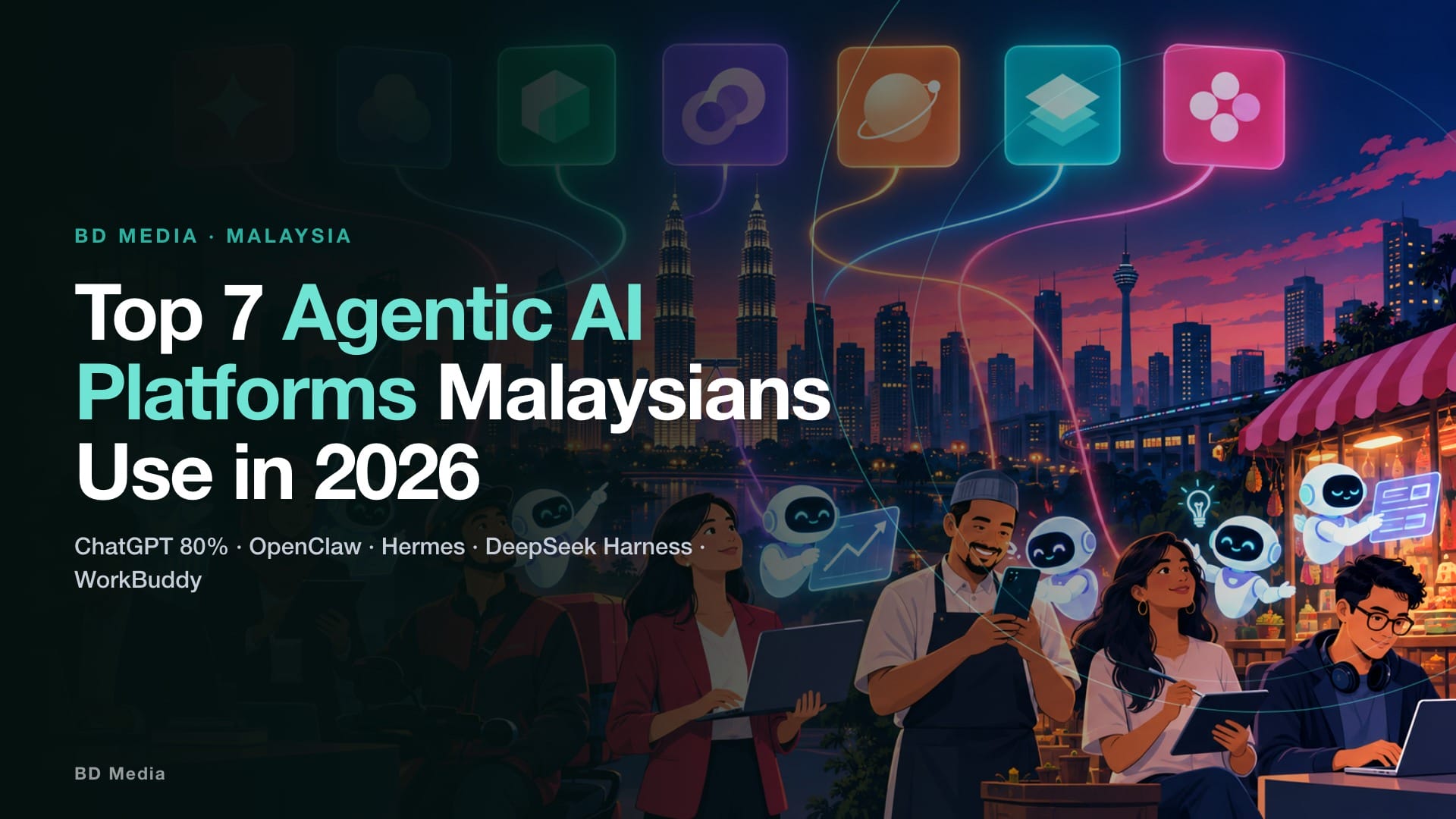
Nine in ten Malaysian professionals already use AI at work — the Stanford AI Index 2026 ranks us among the heaviest AI-using workforces on earth. But the tools that changed how work gets done in 2026 are not chat apps. They are agentic platforms: you hand over a goal, and the system plans, executes across your files and apps, and returns finished work. These are the seven that matter in Malaysia right now.
First, a distinction the hype usually blurs. ChatGPT and Gemini are chatbots: you ask, they answer, the task stays with you. An agentic platform takes the whole task — “fix this bug”, “reorganise this folder”, “produce the report” — and drives itself through every step until the deliverable exists. Anthropic’s engineers, whose essay on building agents remains the field’s reference, define it precisely: an agent is a system where the model “dynamically directs its own processes and tool usage, maintaining control over how it accomplishes tasks.” Malaysia’s developers, sellers and SME owners spent 2026 adopting exactly these systems — and this guide ranks the seven that earned real adoption here, why each one wins, and what to watch out for.
Context: the Chat Era Is the Audience, Not the Competition
Independent measurement makes Malaysia one of the best-documented AI markets in the region. The chat landscape, from Statcounter’s Malaysia tracker (August 2026):
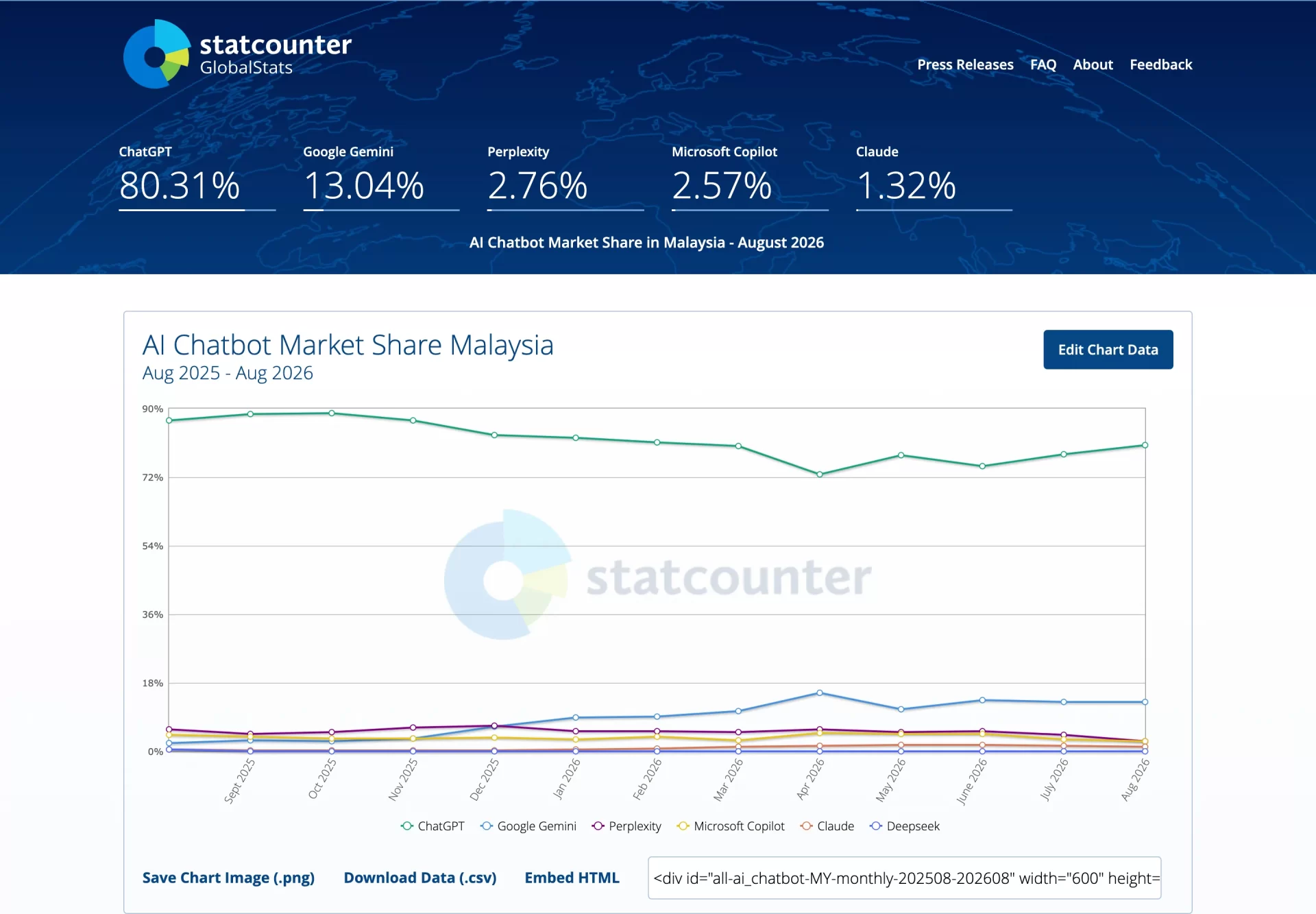
Chat tools hold the audience — ChatGPT 80.3%, Gemini 13.0% — but none of them plans and executes multi-step work on your files. Source: Statcounter Global Stats, August 2026
That table measures the chat era, and it is exactly why the agentic wave matters: the audience is already there, waiting for tools that finish the job. The chat giants know it — OpenAI answered Anthropic’s office agent within two days, and Microsoft is bolting agent modes onto Copilot across Microsoft 365. But the platforms that defined the category are the seven below.
1. Claude Code — the Original Agentic Coding System
Anthropic’s Claude Code is the system that defined the category’s current shape: you hand it a programming task in a terminal, and it reads the codebase, edits files, runs the tests and comes back with committed code — a plan you can watch, approve and steer at every step. It connects to outside tools through MCP (Model Context Protocol), runs in the terminal, the desktop app and IDEs, and has become the reference point every competitor is measured against.
The clearest signal of how well it works is what Anthropic built with it: when its own non-engineering teams started using a developer agent for everyday knowledge work, the company wrapped the same engine for non-technical users — and that product (number 2 below) was famously built with Claude Code in about ten days.
2. Claude Cowork — Claude Code for the Rest of Your Work
That product is Claude Cowork: the same agentic approach as Claude Code, minus the terminal. Launched as a research preview on 12 January 2026, opened to Pro subscribers within days, generally available from 9 April, and reachable from web and mobile since 7 July — where sessions run in Anthropic’s cloud, so the task keeps going after the laptop closes. By September 2026 it had grown important enough that Anthropic folded it into the main brand: “Claude Cowork is now just Claude.”
The design philosophy is “say what, not how”: give it a goal, choose the folders and tools it may touch, and it works across local files, a built-in browser (added 26 August) and connectors such as Google Drive, Slack and Microsoft 365 — reaching for your screen only as a last resort. It hands back finished decks, spreadsheets, organised folders and synthesised research, asks approval before anything significant, and can never delete anything without your sign-off. It is included with paid Claude plans only — Pro from US$17–20 a month, Max US$100–200 — and there is no free tier, one of the clearest dividing lines in this market.
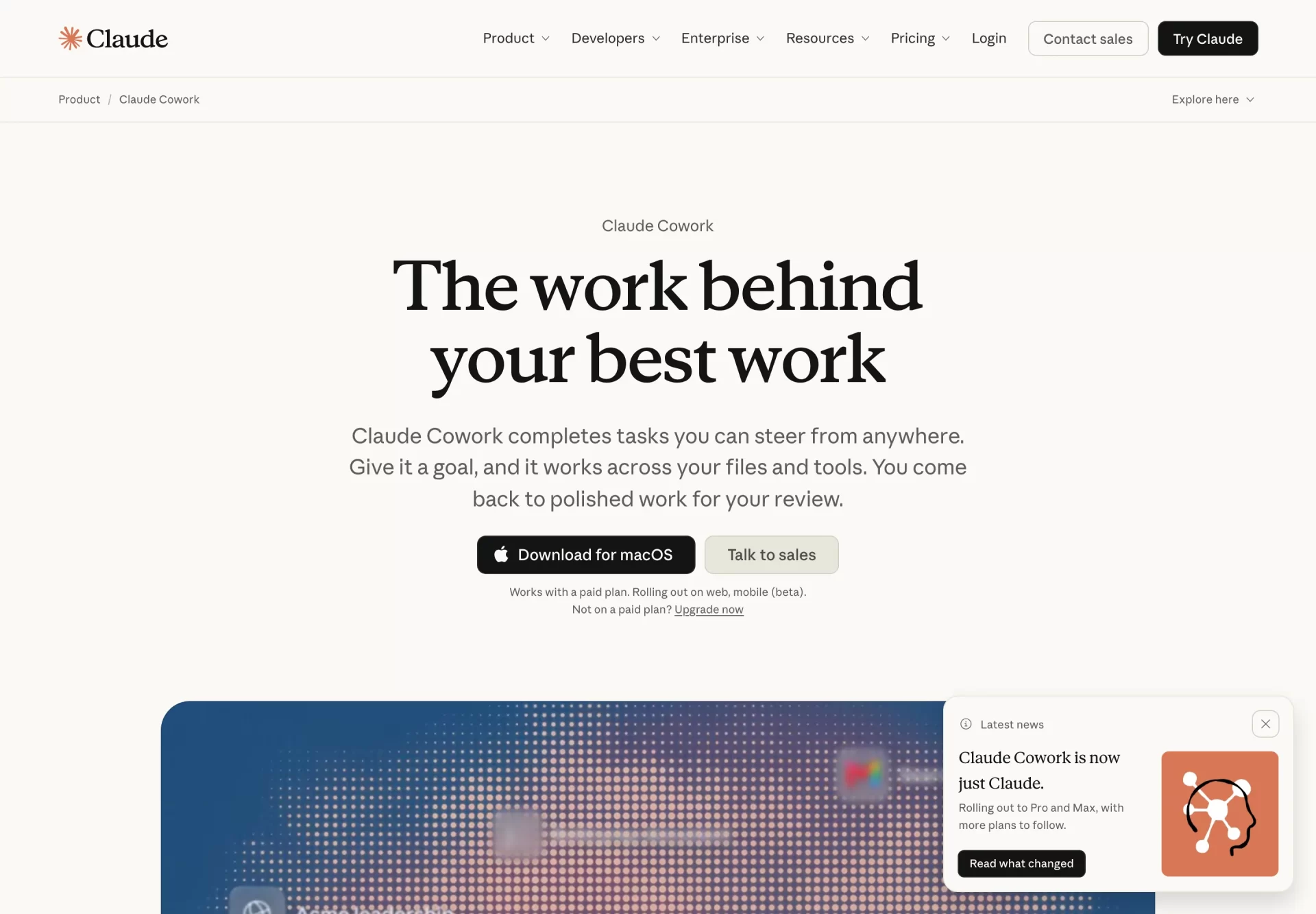
Claude Cowork: built on Claude Code’s engine, minus the terminal. Source: claude.com/product/cowork, September 2026
3. OpenAI Codex — Four Surfaces, Four Million Weekly Developers
Codex is OpenAI’s agentic coding platform, and in 2026 it is unrecognisable from the autocomplete that borrowed its name. Today it spans four surfaces: an open-source Rust CLI (126,000+ GitHub stars), a desktop app launched February 2026, IDE extensions, and a cloud agent inside ChatGPT — one agent, continued across all of them, with cloud sandboxes and worktrees that let many agents run in parallel. OpenAI reported weekly usage passing four million developers, and the platform is bundled with ChatGPT plans rather than sold separately.
The 2026 updates pushed it beyond code: computer use (it can see, click and type in your desktop apps with its own cursor), an in-app browser for front-end work, memory that remembers your project conventions, scheduled automations, and a Skills system that teaches it your team’s standards. Its GPT-5.x-Codex models set state-of-the-art numbers on agentic coding benchmarks — SWE-bench Verified at 88.7% — and customers report cutting early iteration time by 30–50%, or, in one startup’s words, shipping in a weekend what previously took a quarter.
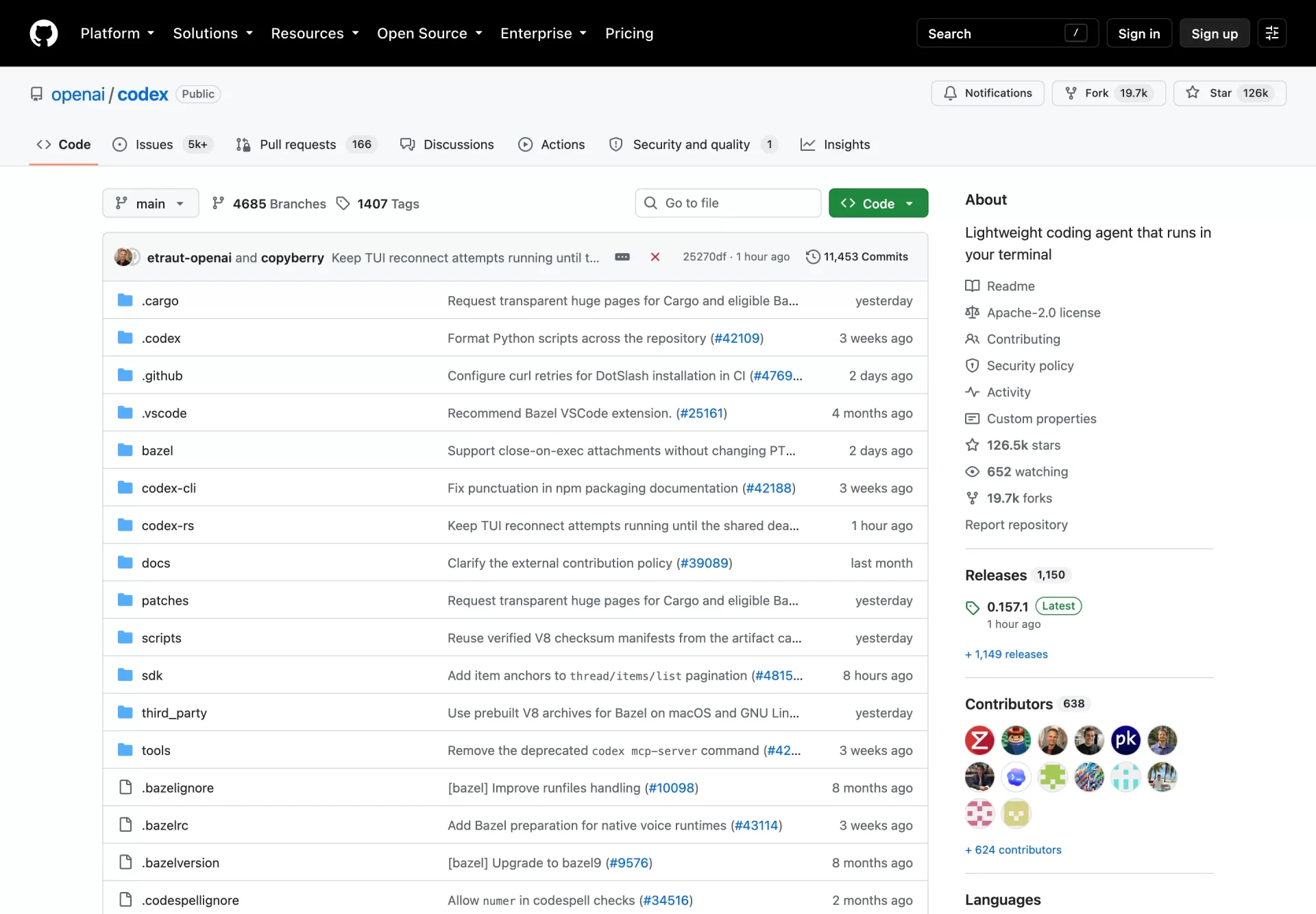
Codex spans CLI, desktop, IDE and ChatGPT cloud — one agent, four surfaces. Source: github.com/openai/codex, September 2026
Why Malaysians pick it: the best value in agentic coding if you already pay for ChatGPT, and the strongest platform for firing many small tasks in parallel. What to watch: tightly interdependent refactors still favour Claude Code’s coordinated approach.
4. OpenClaw — Malaysia’s Hidden Champion
The biggest Malaysian agentic story of 2026 runs on none of the above. OpenClaw — the open-source, self-hosted agent that went viral as Clawdbot in late 2025 — has spawned a full local industry in Malaysia: agencies charging RM5,000 a setup, resellers offering “OpenClaw VPS Malaysia”, training workshops and community events. Search suggestions for “openclaw malaysia” return exactly those three things — VPS, training, events — a sure signal of real local demand.
| Fact | Figure | Source |
|---|---|---|
| GitHub stars, September 2026 | 390,500+ (forks: 82,200) | GitHub repository |
| Community skills on ClawHub | 5,700+ audited in February 2026 | Snyk security audit |
| Channels it plugs into | 50+, including WhatsApp, Telegram, Discord, Slack | OpenClaw documentation |
| Typical Malaysian seller workload | 50–80 WhatsApp enquiries a day, ~80% now answered by the agent | OpenClawMY agency case notes |
OpenClaw at a glance, September 2026.
Architecturally it is a gateway: one self-hosted process that bridges your chat apps to an always-on agent with sessions, memory, skills and multi-agent routing — model-agnostic, MIT-licensed, maintained by an independent foundation. The Malaysian use case is unmistakably commerce: a mid-sized Shopee or TikTok Shop seller drowns in the same ten questions — ada saiz L tak?, berapa hari sampai ke Sabah? — and an OpenClaw instance trained on the catalogue answers them instantly in WhatsApp, sends payment confirmations, follows up “nanti ye” buyers 48 hours later, and keeps customer data on the shop owner’s own hardware rather than a foreign cloud. The trade-off is the setup: you are provisioning a server, installing a gateway, choosing models and maintaining it all yourself.
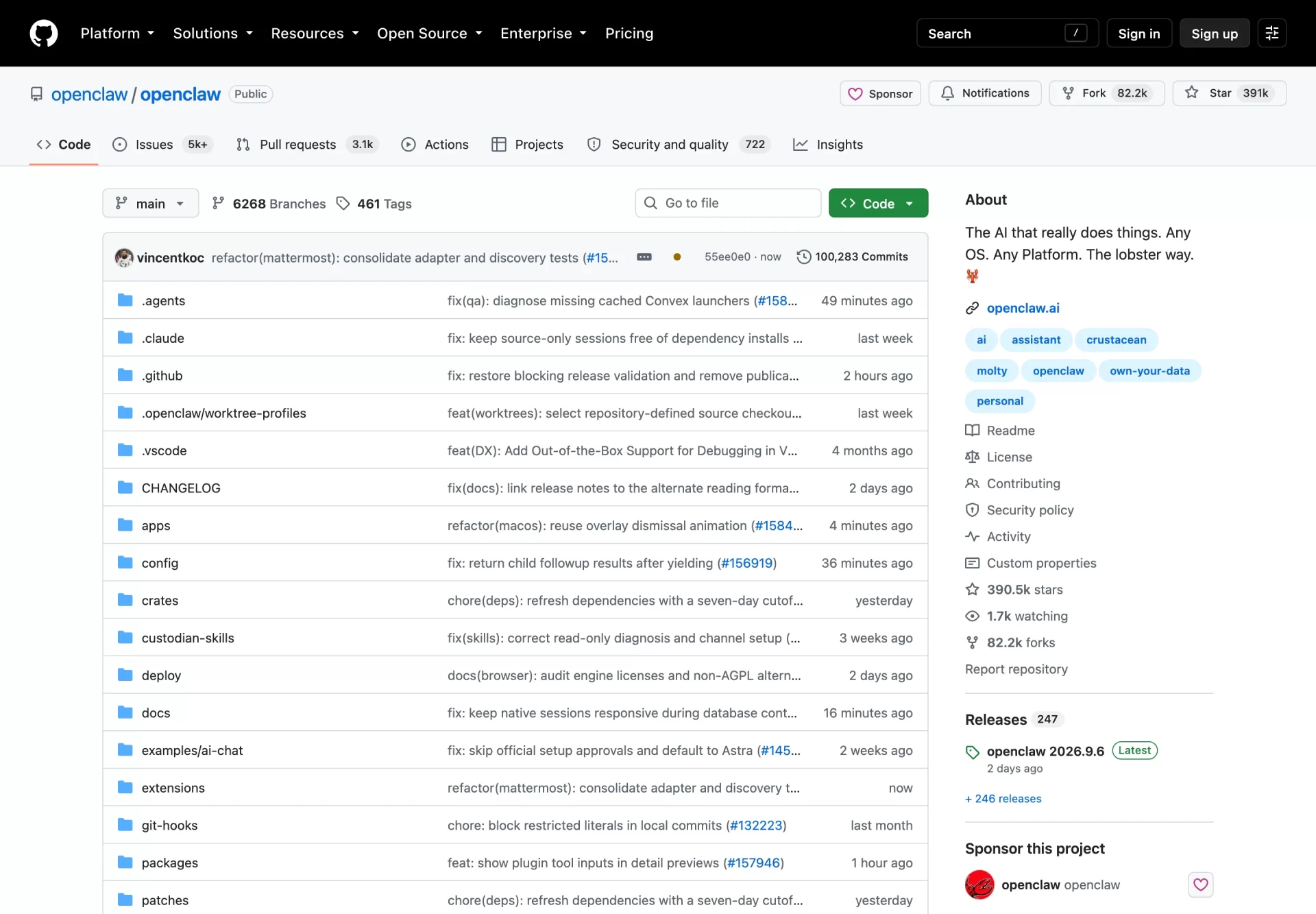
OpenClaw’s repository. Self-hosted, MIT-licensed, and wired into WhatsApp — powerful, but with real setup and maintenance weight.
5. Hermes Agent — the Self-Learning Challenger
February 2026 brought a challenger built on a different philosophy. Hermes Agent, from the open-source lab Nous Research, crossed 90,000 GitHub stars in about six weeks by promising what OpenClaw does not: an agent that improves itself. After each task, Hermes distils what it did into a reusable skill file; the vendor reports similar tasks run 2–3 times faster after ten to twenty repetitions. Its layered memory — working, episodic, semantic — persists across restarts, so the agent you run in six months is not the agent you installed today.
The community shorthand is accurate: OpenClaw “does”, Hermes “learns”. Malaysians searching “hermes ai vs openclaw” are really asking which trade they prefer — OpenClaw’s enormous ready-made skill library and messaging reach, or Hermes’ tighter security record (no major agent CVEs reported as of April 2026) and self-improving loop. The two even interoperate over the ACP protocol, which is why some Malaysian agencies now run both: OpenClaw as the WhatsApp front door, Hermes as the back office that gets sharper every week.
6. DeepSeek Harness — the August Meteor, Six Figures in Days
The newest wave arrived on 13 August 2026, when DeepSeek open-sourced DeepSeek Harness (CLI name dsh) under the MIT licence. It is not a chatbot — it is the entire machinery around a model: tools, sessions, sandboxes, permission policies and the agent loop itself, packaged so that literally everything is a plugin, down to the loop. Star counts vary by source and by day — one tracker logged 141,000 within four days, a direct API snapshot showed 137,000-odd mid-August, others are lower — so call it six figures inside the first week and treat exact numbers as moving. What is not in dispute is the idea: Agent = Model + Harness, and DeepSeek shipped the harness as the product.
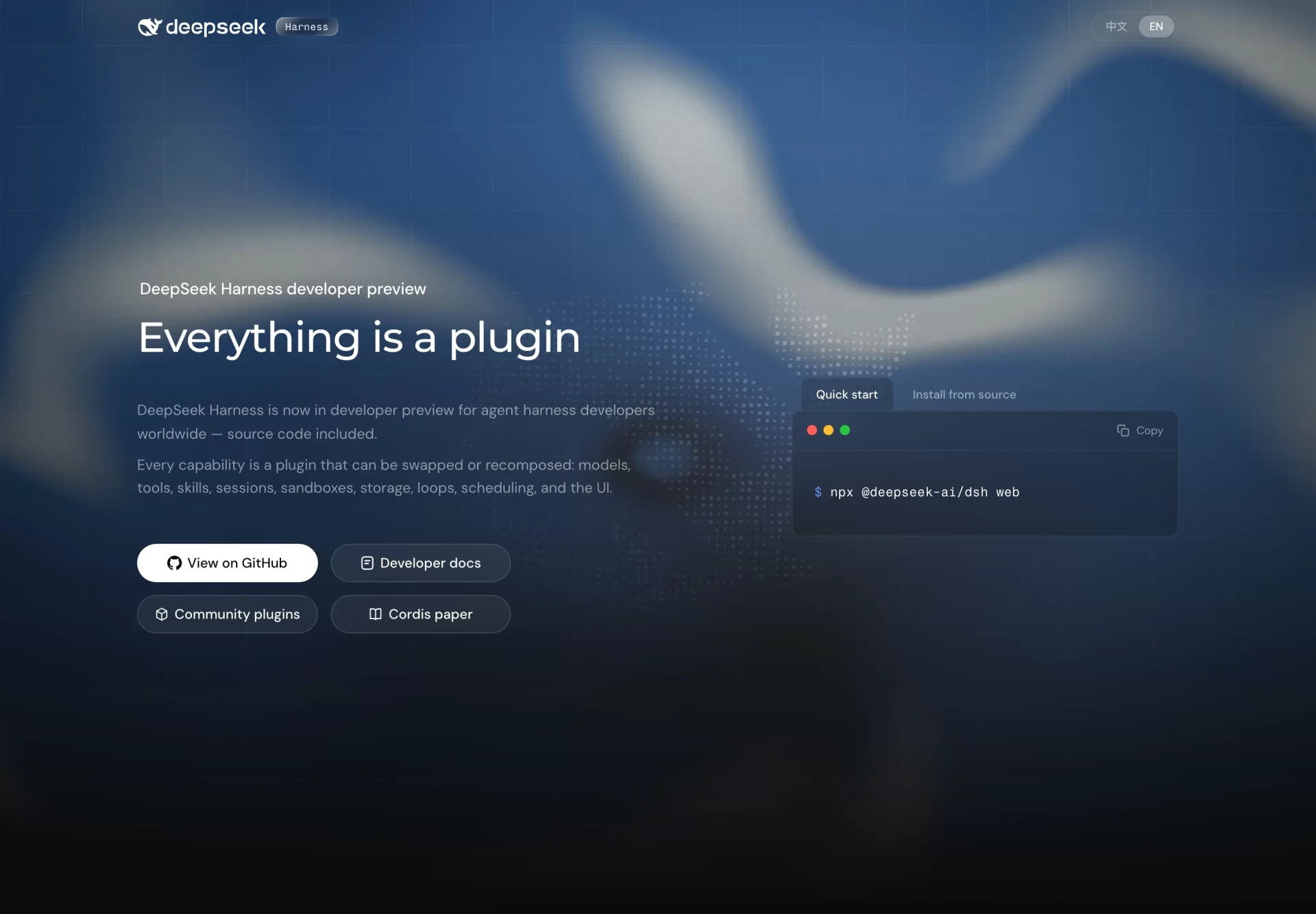
DeepSeek Harness runs as a local web UI or headless coding agent, and connects to DeepSeek, Anthropic or any OpenAI-compatible endpoint. Source: deepseek.com/harness, September 2026
Why Malaysians talk about it: it positions itself as an open-source alternative to Claude Code, runs on any OpenAI-compatible endpoint (including a DeepSeek API key), costs a few ringgit of tokens instead of a monthly subscription, and its append-only session log lets you replay or fork any run. Two cautions: it is a v0.1 developer preview with promised breaking changes, and it is a developer tool — business owners who want WhatsApp, not a terminal, belong in the sections above. Malaysian developers who want the cheap-token route without managing a key themselves can route it through BigDomain’s LLM Token Hub, which bills DeepSeek and other models in one place.
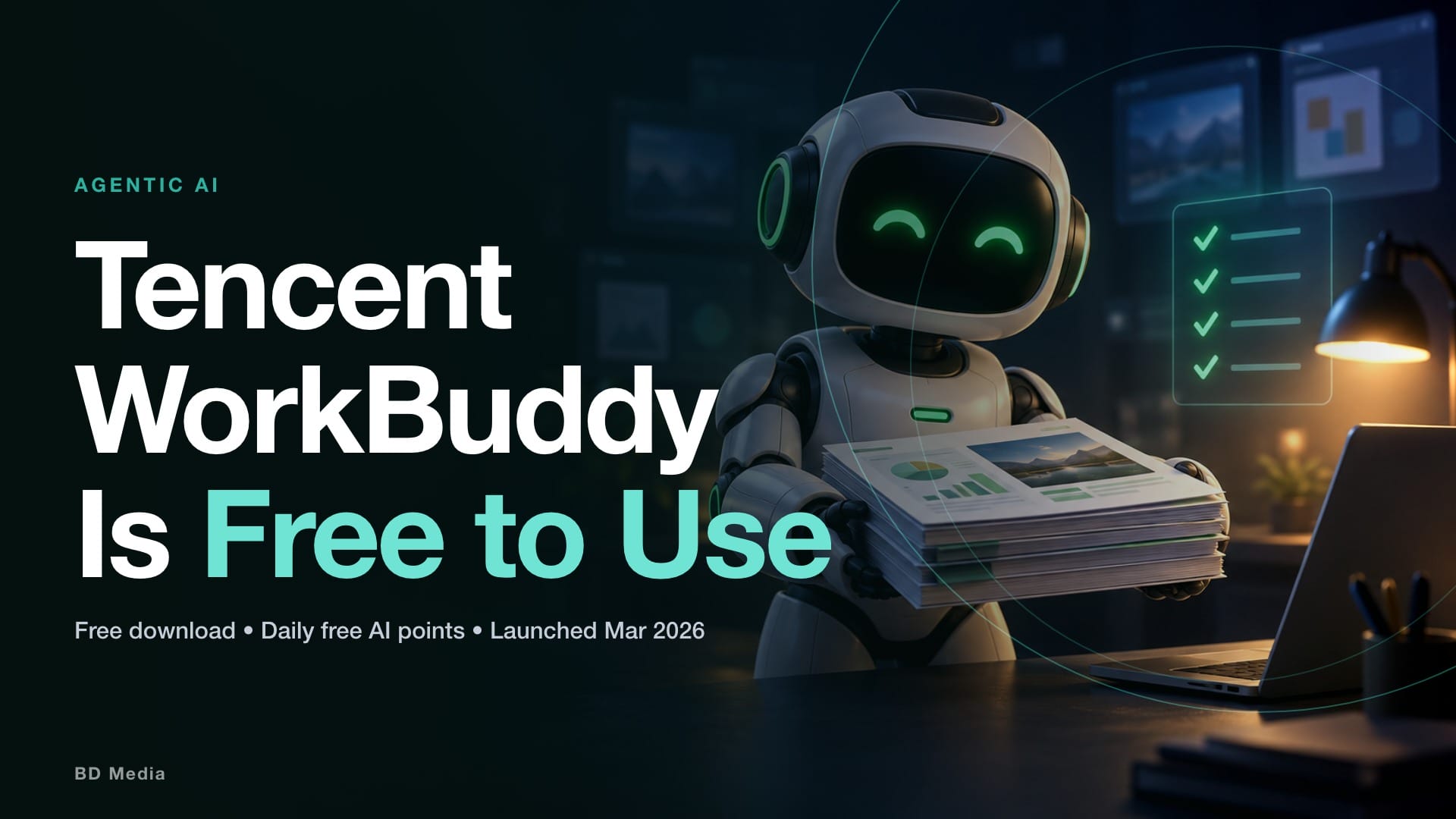
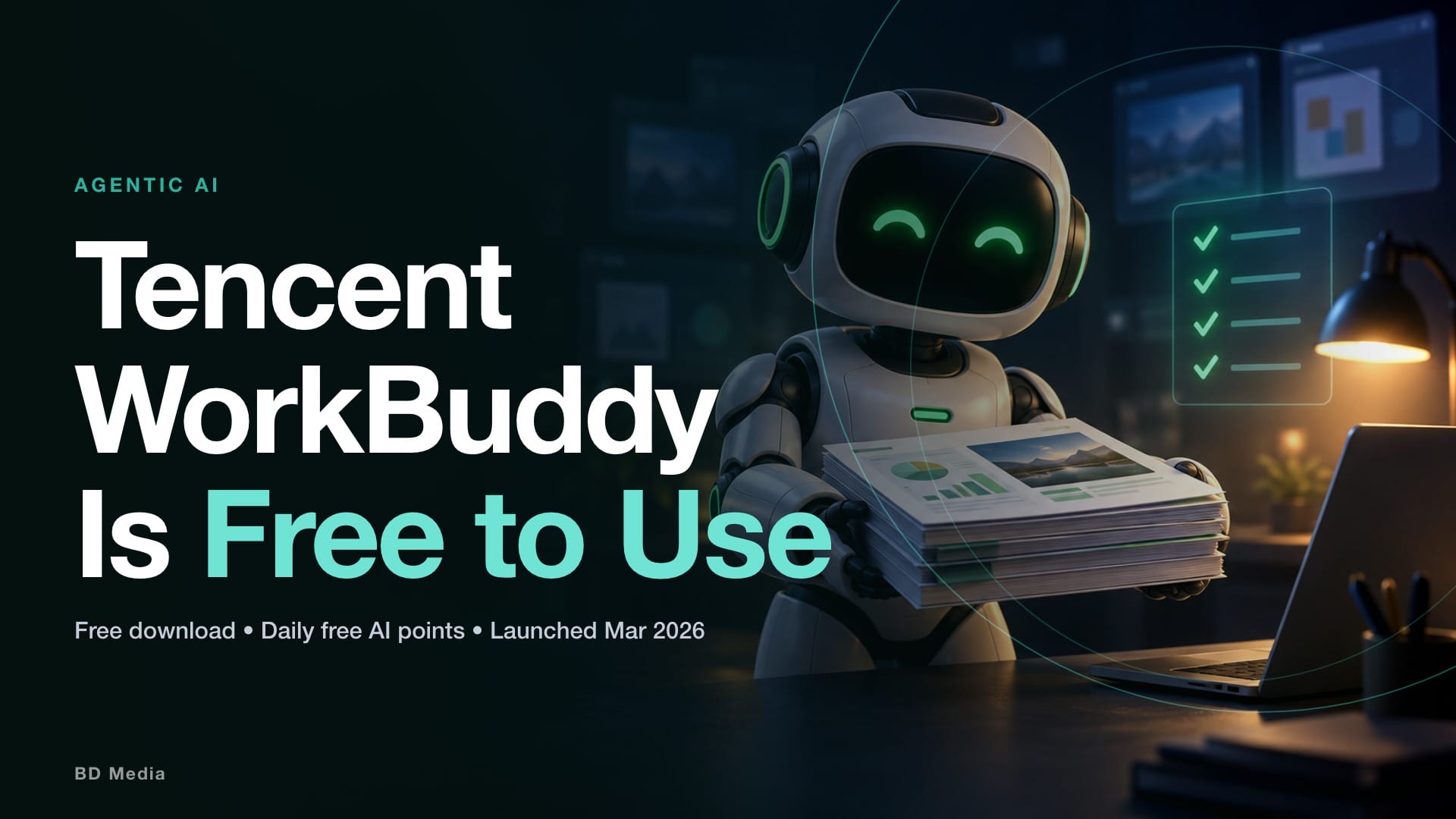
7. Tencent WorkBuddy — the Enterprise Agent Malaysians Can Start Free
The seventh platform is the one built for people who want enterprise-agent capability without an enterprise contract. Tencent WorkBuddy, launched in March 2026 and rolled out internationally in May, took the No.1 spot for task capability in IDC’s September 2026 enterprise agent evaluation and runs in production across 50+ industries. Tencent Cloud brought it to Southeast Asia with customers like Malaysia’s Ryt Bank applying the same agent stack to AI-powered banking.
For a Malaysian SME the math is the hook: the free plan grants 100 credits a month plus daily active rewards, no credit card, and the agent plans and executes real deliverables — reports, decks, spreadsheets, working software — rather than stopping at chat. It reads and writes files in folders you authorise, routes each task to a suitable model, and connects to Slack and Telegram on the international edition. And compared with the self-hosted route above, there is nothing to provision: install, sign in, give it a task.
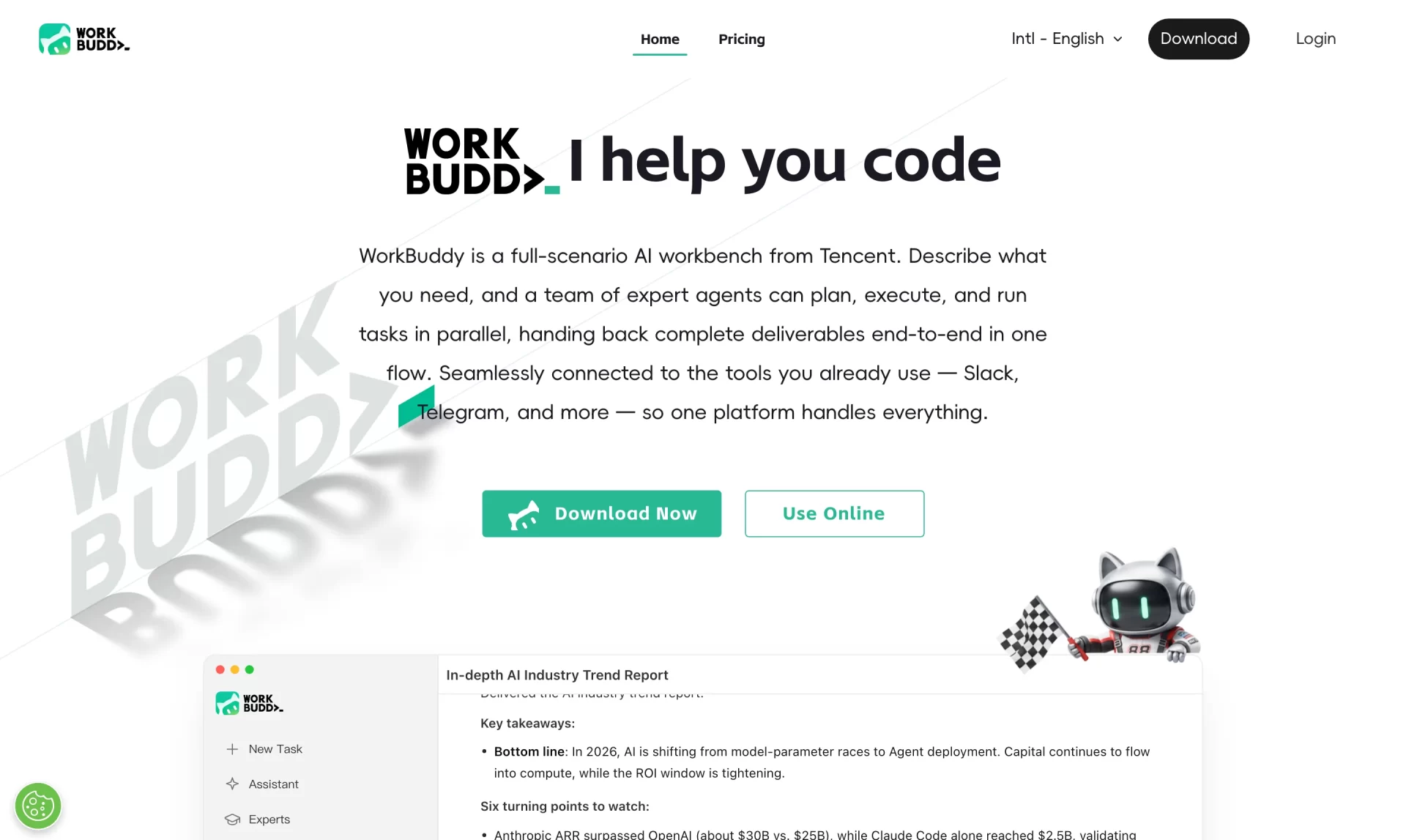
WorkBuddy: enterprise-agent capability, install-and-go. Source: WorkBuddy international site, September 2026
“We started with OpenClaw. WorkBuddy’s setup and use — that simple. Since moving, we’ve replaced and rebuilt a lot of our workflows in AISEO, Xiaohongshu content, and app development and maintenance.”
— Dr Henry Tye, founder, Big Domain (Tencent official partner)
The Chat Incumbents Are Bolting Agents On
Worth watching, not yet category-defining: Microsoft’s Copilot gained agentic modes across Microsoft 365 (its Malaysian enterprise footprint runs deep — 63% of knowledge workers use it to summarise, 57% to draft), Google is pushing agents through Gemini’s Workspace hook-ups and its Antigravity developer IDE, and OpenAI’s ChatGPT Work now contests Cowork directly. The chat giants have distribution; the platforms above have the working loops. 2027 will be about which list inherits the other.
So Which One Should a Malaysian Business Run?
| If you want… | Run | Because |
|---|---|---|
| Coding agent for delicate, coordinated work | Claude Code | The reference standard; MCP ecosystem; powers Cowork |
| An agent for non-technical office work | Claude Cowork | Local VM, approvals built in, web + mobile since July |
| Best value agentic coding, parallel tasks | OpenAI Codex | Bundled with ChatGPT plans; CLI + desktop + cloud |
| A WhatsApp agent for your shop | OpenClaw (with precautions) | Free, local data — but you own the setup and upkeep |
| An agent that gets better weekly | Hermes Agent | Self-learning skills, clean security record |
| A coding agent you fully control | DeepSeek Harness | Open-source, cheap tokens, replayable sessions |
| Enterprise agent work, zero setup, free to start | Tencent WorkBuddy | IDC No.1, install-and-go, free credits, no card |
The seven-way decision, September 2026.
One practical note closes this out, and it is the same lesson our own team learned: none of these choices is permanent, and the strongest Malaysian teams in 2026 run two — a conversational front door and a workhorse agent behind it. Start with the free tier of whichever platform matches your week, hand it one real task from your actual desk, and let the results, not the hype, make the second decision for you.
Want the enterprise-agent route without the enterprise price? Big Domain is a Tencent official partner and runs Malaysia’s LLM Token Hub for DeepSeek, GLM and more. Try WorkBuddy free — download it, use the bonus-points invite at sign-up, and see the agent work on your own files today.
⬇ Download WorkBuddy Free · BigDomain Explore Agentic AI Malaysia →
Sources
- Anthropic — “Building Effective Agents” (Dec 2024) and the Claude Cowork product page (claude.com/product/cowork): launch timeline, plan pricing, built-in browser, “now just Claude” rebrand
- OpenAI — Codex product page and release notes: desktop app February 2026, computer-use and plugins update, GPT-5.3-Codex announcement; weekly developer figures via Software Informer
- Statcounter Global Stats — AI chatbot market share, Malaysia, August 2026
- Stanford AI Index 2026 Annual Report, Malaysian figures as reported by Bernama (28 April 2026)
- OpenClaw documentation (docs.openclaw.ai) — gateway architecture, channels, security model; Snyk audit of ClawHub, February 2026; The New Stack, April 2026
- DeepSeek official — deepseek.com/harness and the deepseek-ai/deepseek-harness repository, August 2026
- Microsoft 2026 Work Trend Index for Malaysia with Taylor’s University Future of Work Institute
- EY 2025 Work Reimagined Survey (Malaysia); MDEC Digital Economy Report
- Tencent Cloud — WorkBuddy and Miora Southeast Asia launch announcements, 2026; IDC enterprise agent evaluation, September 2026