Apple cut the daily AI allowance for some of its engineers from $300 to $200 last month, and is preparing further cuts that could take some engineering teams to $100 a day, according to Bloomberg. On 4 November 2026 the wire reported that Apple had quietly lowered the cap in October, that teams outside engineering already sit at $100, and that the company has considered going as low as $25 for some groups. That is the clearest example yet of a large company treating an AI token budget as a line item with a ceiling rather than an entitlement. For a Malaysian business paying for AI seats, the number matters less than the mechanism that produced it.
The allowance is measured in tokens, the units of text and code that a model processes when it answers a request. Vendors bill by the token, and the more capable the model, the more each token costs. A coding task that reads a large codebase and writes a patch can burn through millions of them in an afternoon, which is why the caps exist at all.
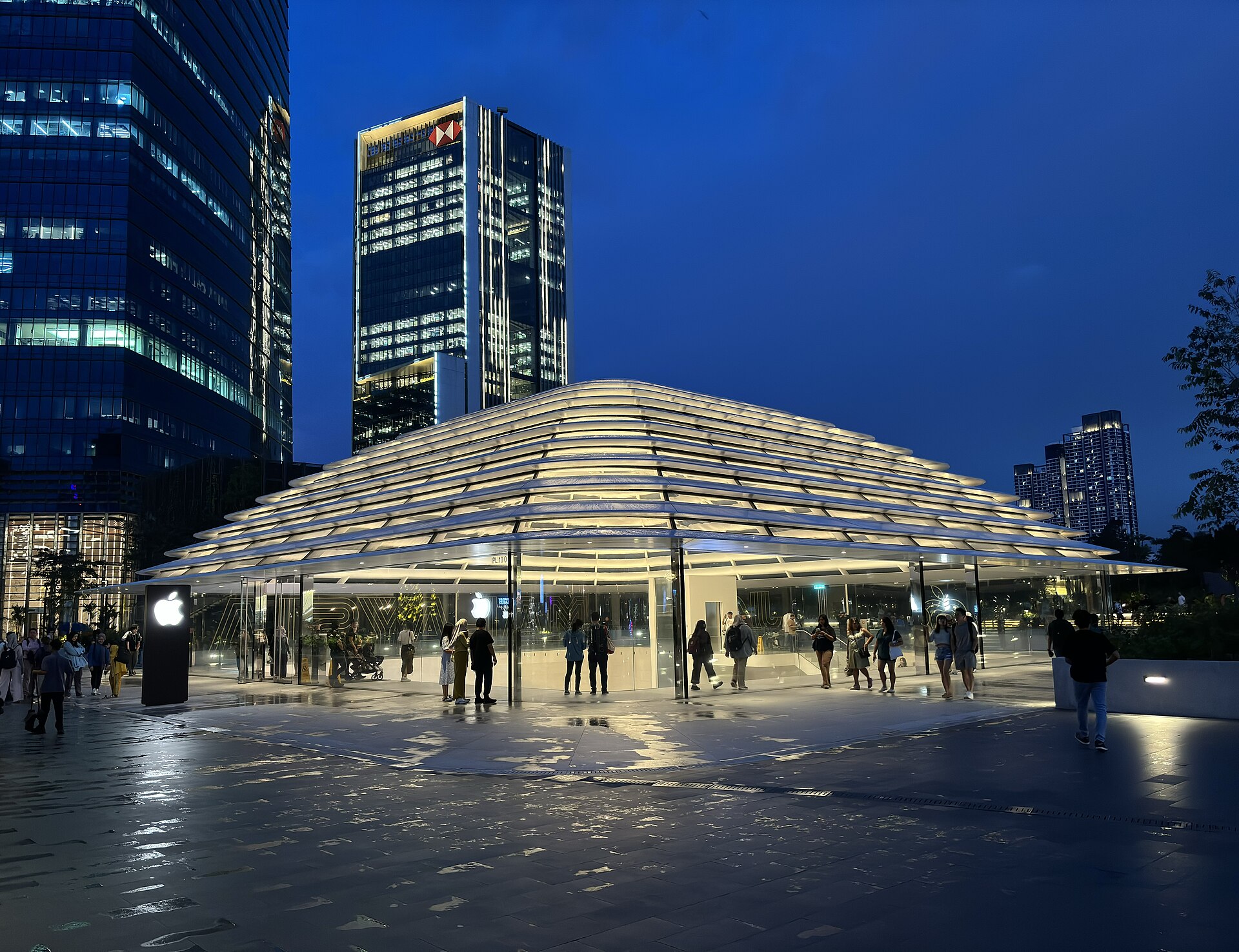
Apple’s Kuala Lumpur store at The Exchange TRX. The company’s internal AI budgeting rules apply across its global operations, including teams outside the United States. Photo: LegendaryLim / Wikimedia Commons, CC0.
What an AI token budget actually caps
Apple’s figure is a spend ceiling per person per day, not a token count, and that distinction matters when the policy is copied. It converts into a very large number of tokens, and annualised into a ringgit figure that any finance team will want beside the salary budget before it approves another seat.
| Apple’s daily cap | Per day, ringgit | Per year, 250 working days | What it implies |
|---|---|---|---|
| $300 (before October) | RM1,214 | RM303,435 | The old default; employees told Bloomberg few people ever used it up |
| $200 (since October) | RM809 | RM202,290 | The current cap for some engineers, a 33 per cent cut |
| $100 (planned for some engineering teams) | RM405 | RM101,145 | The level most non-engineering teams already sit at |
| $25 (under consideration for some teams) | RM101 | RM25,286 | A 92 per cent cut from the old allowance |
Source: Bloomberg, 4 November 2026, for the dollar caps; conversion at RM4.046 to the dollar, spot rate on 6 November 2026. Annual figures assume 250 working days and are arithmetic, not an Apple disclosure.
RM202,290 a year is the ceiling for one engineer at the current cap. It is a ceiling, not a spend. The gap between the two decides whether the policy saves anything at all.
The cap is a control, not the saving
Bloomberg’s reporting carries a detail that undercuts the obvious reading. Some Apple employees said most people were not getting near the $300 limit in the first place, which means the cut from $300 to $200 may save very little. Others read the change as a broader signal about cost discipline, and worried about layoffs.
The lesson for a smaller company is different: a cap changes behaviour at the top of the distribution, not the average. If nine engineers spend RM30 a day and one spends RM900, a cap at RM400 saves money on exactly one person. If the whole team already sits under the cap, the policy buys the appearance of control and nothing else.
Apple’s other move is the one that actually moves the average. According to the same reporting, some teams have been asked to shift to cheaper models, or to models that run on the device rather than in a data centre. That is model routing, and it is where the money is.
The routing arithmetic, in ringgit
A token bill is not one price. It is an input price and an output price, and the spread between models is wide: about five times across the three tiers below, and more than twenty times between a frontier model and the cheapest flash model on the same list. Using the list prices published for Malaysian buyers, and assuming a typical coding or drafting mix of 80 per cent input and 20 per cent output, the same $200 a day buys very different amounts of work.
| Model tier | List price per million tokens, input / output | Blended cost per million | Tokens per $200 day |
|---|---|---|---|
| Frontier (Opus-class) | RM21 / RM105 | RM37.80 | About 21 million |
| Mid-tier (Sonnet-class) | RM8 / RM42 | RM14.80 | About 55 million |
| Fast (Haiku-class) | RM4 / RM21 | RM7.40 | About 109 million |
Source: model list prices published on bigdomain.my/tokenhub, read 6 November 2026, converted at RM4.046 to the dollar. Blended cost assumes 80 per cent input and 20 per cent output tokens. Real bills vary with prompt length, cache hits and reasoning tokens.
The last column matters most. The difference between sending routine work to a frontier model and sending it to a fast one is not a few per cent. It is a factor of five, and it compounds across a team and a year. Apple did not cut its way to savings by lowering a ceiling. It lowered the ceiling and then told teams to change which model answers.
Apple is not the outlier, it is the laggard
Tesla caps employee AI spending at $200 a week, which is a quarter of Apple’s new daily allowance. Uber exhausted its annual AI budget in a matter of months and now caps each AI coding tool at $1,500 a month. Meta has introduced token budgets and pushes staff toward internally built tools. Microsoft has tightened internal AI spending. All of that is from the same Bloomberg reporting, summarised by Fast Company on 5 November 2026.
The direction is consistent and it runs one way: the first two years were about adoption, and the next phase is about unit economics. A Malaysian company without a budget is not behind on adoption. It is behind on the control that decides whether the tool is still funded at the next renewal.
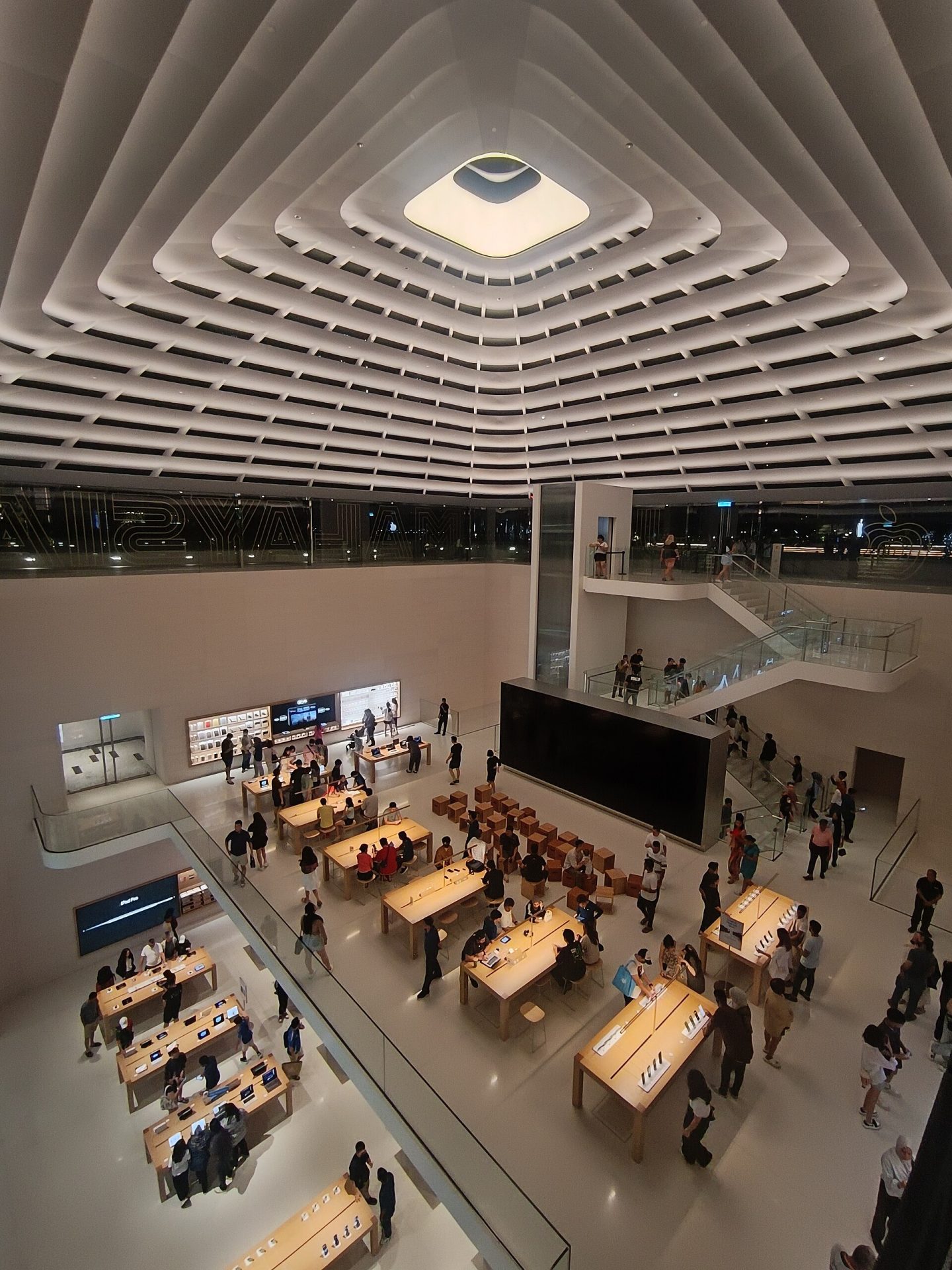
The same store from the inside. Retail is the visible end of Apple’s AI spending, and the token budgets are the part that decides what it costs. Photo: angys / Wikimedia Commons, CC BY-SA 4.0.
How to set a token budget for a Malaysian team
Five decisions, none of which needs a new platform, and all of which are cheaper than discovering the bill at year end.
- Denominate the budget in ringgit, not credits. A team cannot manage a number it cannot convert. If the tool bills in dollars and your finance team budgets in ringgit, the exchange rate becomes an unmanaged line item.
- Set the cap per key, not per person. A person has several tools. A key has one spend line. Per-key quotas are the only version of this that survives contact with a team of twenty.
- Route by default, escalate by exception. Cheap model as the default, frontier model on request or for named task types. This is the same lever Apple pulled, and it moves more money than any ceiling.
- Prepay and expire. A prepaid balance with a stated expiry turns an open-ended subscription into a budget you approved once. It also removes the surprise invoice.
- Review at 90 days, not 12 months. Model prices move quarterly in both directions. A routing decision made in January is usually wrong by April.
Where a ringgit-denominated key fits
BD Token Hub is built for this problem. It is a single key that fronts the frontier and mid-tier models, billed in ringgit, prepaid, with spend visible per key. A Malaysian team can put a ceiling on a key, hand it to a project, and see what that project actually cost without reconciling a dollar invoice against a ringgit budget at month end.
Setting a first budget: fix the monthly ceiling in ringgit, decide which model tier is the default, then put both on one key. See the LLM Token Hub packages and the per-model ringgit pricing.
None of this depends on which vendor supplies the tokens. Apple is one of the richest companies in the world, it is spending more on research than ever, and it still decided that an engineer’s daily AI allowance needed a ceiling and a 33 per cent trim. If a company that size still needs a ceiling, the ceiling is not a comment on the team. It is what keeps the tool funded next year.
What to watch next
Two signals. Whether Apple’s further cuts land at $100 or $25 shows how much of the original allowance was ever used. And whether the cheaper-model instruction spreads beyond engineering shows whether routing is being treated as a cost measure or as a permanent operating rule.
Read next: Enterprise AI cost in Malaysia: rent, buy or pay per token. The Bloomberg report is at bloomberg.com, and Fast Company’s summary, which carries the peer-company caps, is at fastcompany.com.
Last updated: 6 November 2026. Apple’s figures are as reported by Bloomberg and have not been confirmed by Apple. Ringgit conversions use the spot rate on 6 November 2026 and will move. Model prices are list prices and change without notice.