Malaysia’s sovereign AI cloud now has a foreign partner on paper. The Malaysian Communications and Multimedia Commission said on 18 November 2026 that Prime Minister Anwar Ibrahim and US President Donald Trump had announced an intention to cooperate on the project, including participation by US technology companies. Washington indicated support of about RM206 million through a programme called SI SPARK.
Nothing has been signed. The commission’s statement says that support is subject to the two governments agreeing its terms and scope, and that any American company taking part would first have to satisfy Malaysian law, Malaysian procurement procedures, and the relevant technical and security requirements.
Malaysia also keeps the decisions that matter. Design, procurement and operations stay with Putrajaya. The hardware and the data it holds stay on Malaysian soil, under Malaysian law, in Malaysian possession, custody and control. That is the sentence a buyer should read twice, because it is the one that turns a foreign-supplied cloud into a domestic one.
Last updated: 20 November 2026. This page was first published on 12 October 2026, when the plan had no partner and no stated cost. It has been rewritten around the 18 November announcement; the sections that record what the October budget speech said are kept, and dated.
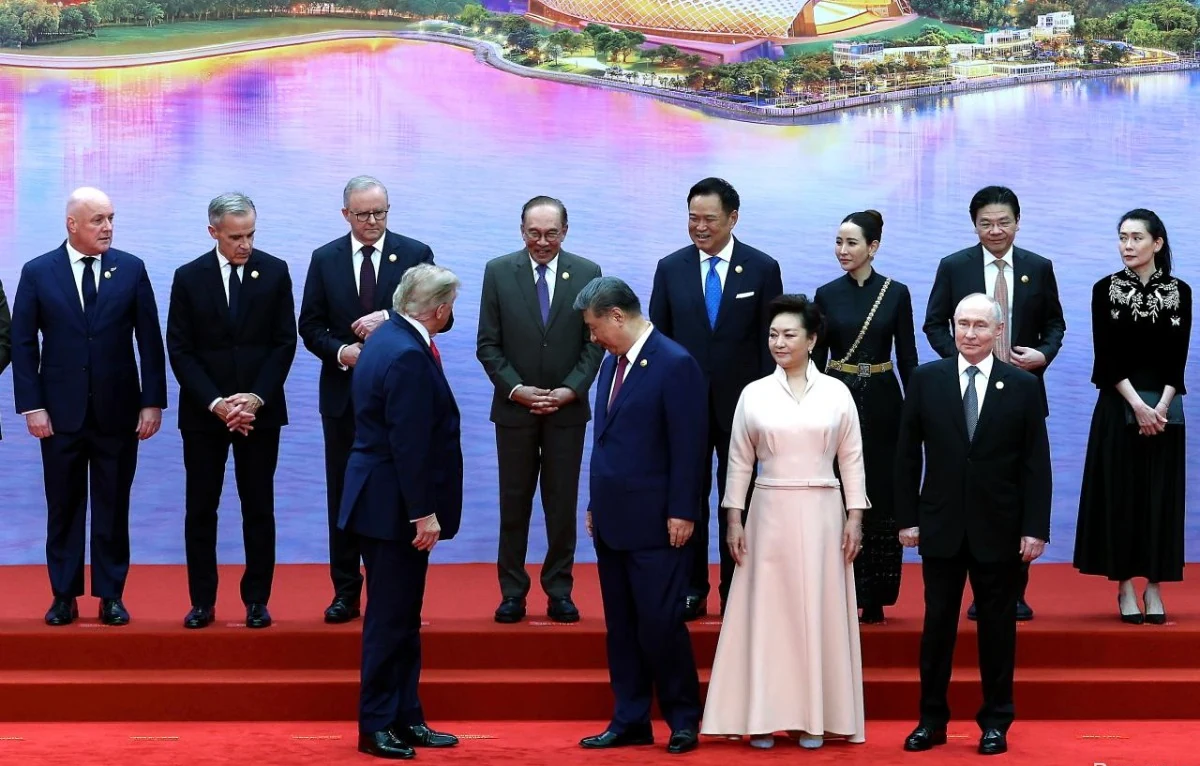
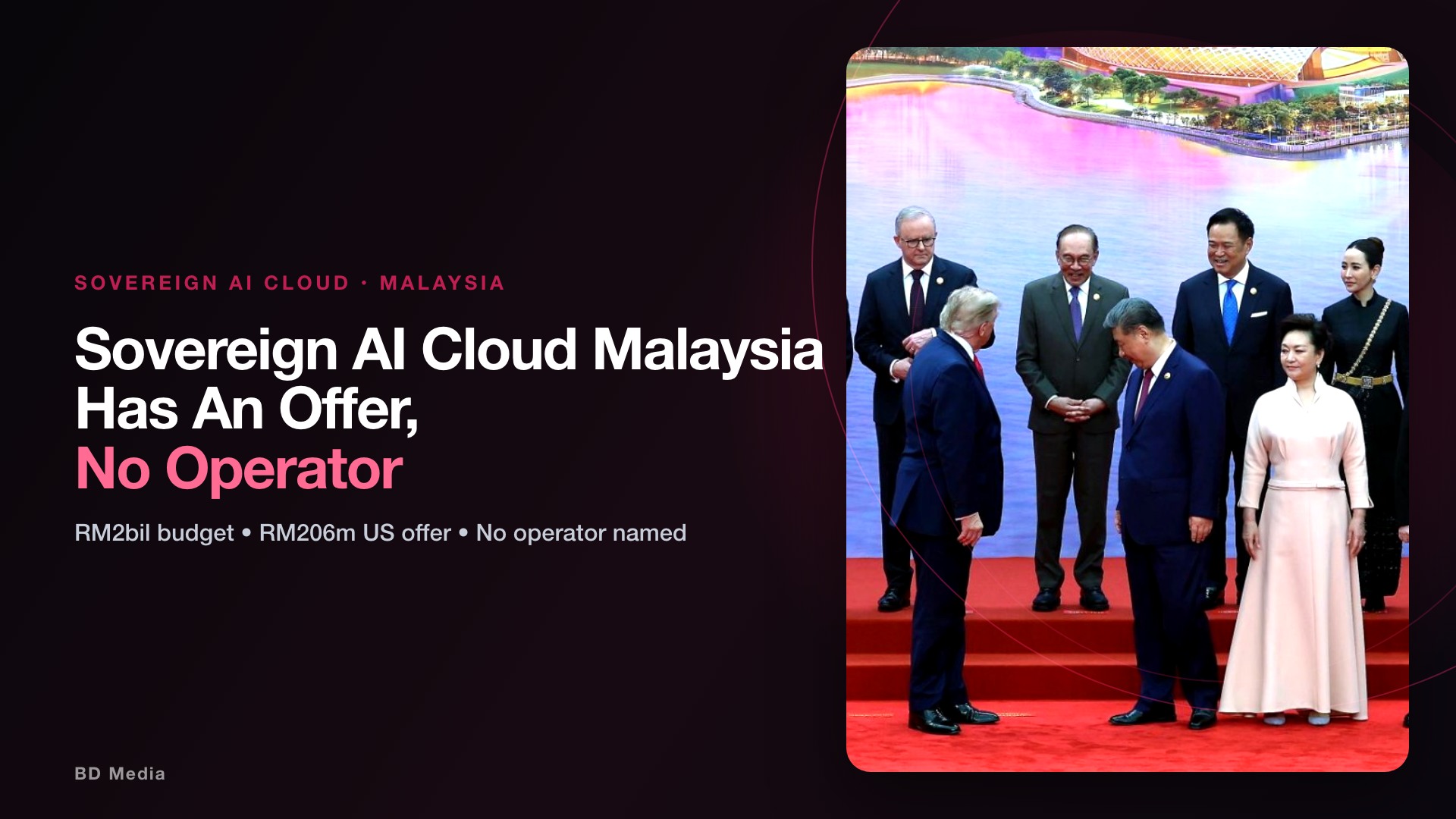
US President Donald Trump greets China’s President Xi Jinping at the APEC leaders’ welcome dinner in Shenzhen on 18 November 2026, with other APEC leaders standing behind them. The Malaysia-US announcement was dated the same day. Photo: Bernama.
Sovereign AI cloud Malaysia: what changes for an SME
Nothing changes this quarter. There is no price list, no sign-up page, no service tier and no operator to buy from. What has changed is the answer to a question procurement teams already put to their cloud provider: who holds the data, and whose law applies to it.
If the facility is built as described, a Malaysian company will be able to run models on infrastructure that is owned, held and controlled here, and argue data residency from a contract clause rather than a marketing page. That is worth tracking, but it is not worth waiting for.
The second change is a route. American firms can take part only through Malaysian law and Malaysian procurement, which puts a local integrator, reseller or data-centre operator between the vendor and the government buyer. A firm that already sells into the public sector has something to prepare for, while a firm that does not should not invent a lane.
What Malaysia keeps, in the regulator’s own words
In English: Malaysia will determine the design, the procurement method and the operating arrangements; the infrastructure and the data it hosts will be located in Malaysia, subject to national law, and will remain in Malaysia’s ownership, custody and control.
Read that as a procurement instruction rather than a slogan. A vendor that wants in is a supplier, not the operator of record. The statement also names the parts of the deal that are not about hardware at all: technical assistance, and training to build a local AI workforce and to run secure, resilient digital infrastructure.
The programme’s name is where the definition hides. SI stands for super intelligence, not sovereign infrastructure. The US Mission to ASEAN describes it this way in its fact sheet on the East Asia Summit:
The offer, the budget, and the gap between them
Malaysia did not come to this empty-handed. The 2026 budget set aside RM2 billion for the project and named the communications regulator as the agency to build it, according to Bloomberg’s report carried by The Star on 19 November. Against that commitment, the American indication is roughly a tenth.
| Item | Figure | Status on 20 November 2026 |
|---|---|---|
| Budget allocation | RM2 billion | Set aside in the 2026 budget, per named reports |
| US support indicated | About RM206 million | Indicative only; terms and scope not agreed |
| Operator | None named | Open |
| Site | None named | Open |
| Procurement rules | Not published | Open |
| Commercial access for business | Not published | Open |
The commission states its figure in US dollars. This page converts at RM4.11 to the dollar, the rate The Edge Malaysia used on 19 November for a separate energy agreement signed the same week. The converted sum should be read as an indication, because the statement attaches a condition to every part of it.
RM206 million does not build a sovereign cloud. A single hall of current-generation accelerators costs more than that. What the sum plausibly buys is what the statement actually lists: assistance, training, and the political cover for American firms to bid on a Malaysian project.
The practical test: a figure becomes a budget when a procurement notice appears. No notice, no tender number and no evaluation criteria have been published for this project. Until one is, treat the money as an intention and the facility as a plan.
What is still missing
On 12 October this page listed five things the plan did not have: an operator, a site, a date, a cost and a definition. Two have moved. The cost now exists, as a budget line and a foreign offer. The definition exists, in the programme’s name.
Three have not. No operator has been named. No site has been named. No date has been given. The procurement rules a bidder would need are unpublished, and so is any access tier that a Malaysian business could buy.
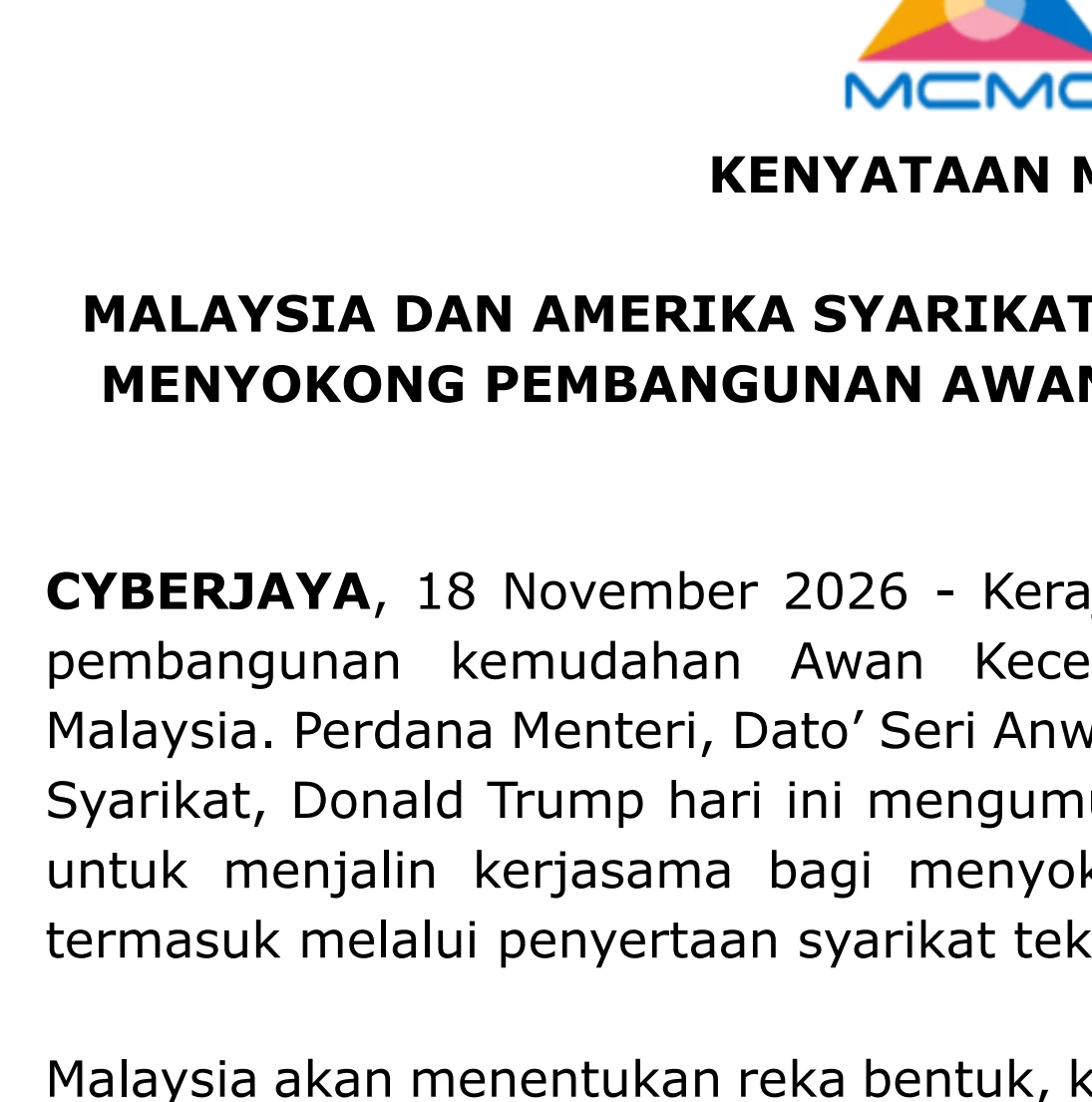
The regulator’s statement as published, cropped to the headline and the operative paragraphs. The Malay text on data custody is in the second paragraph. Source: MCMC, 18 November 2026.
That matters for planning, because a company choosing where to run a model next year cannot schedule around a facility with no date. The reasonable reading is that this is a government-first build, aimed at classified material and personal data, with commercial access left to a later decision.
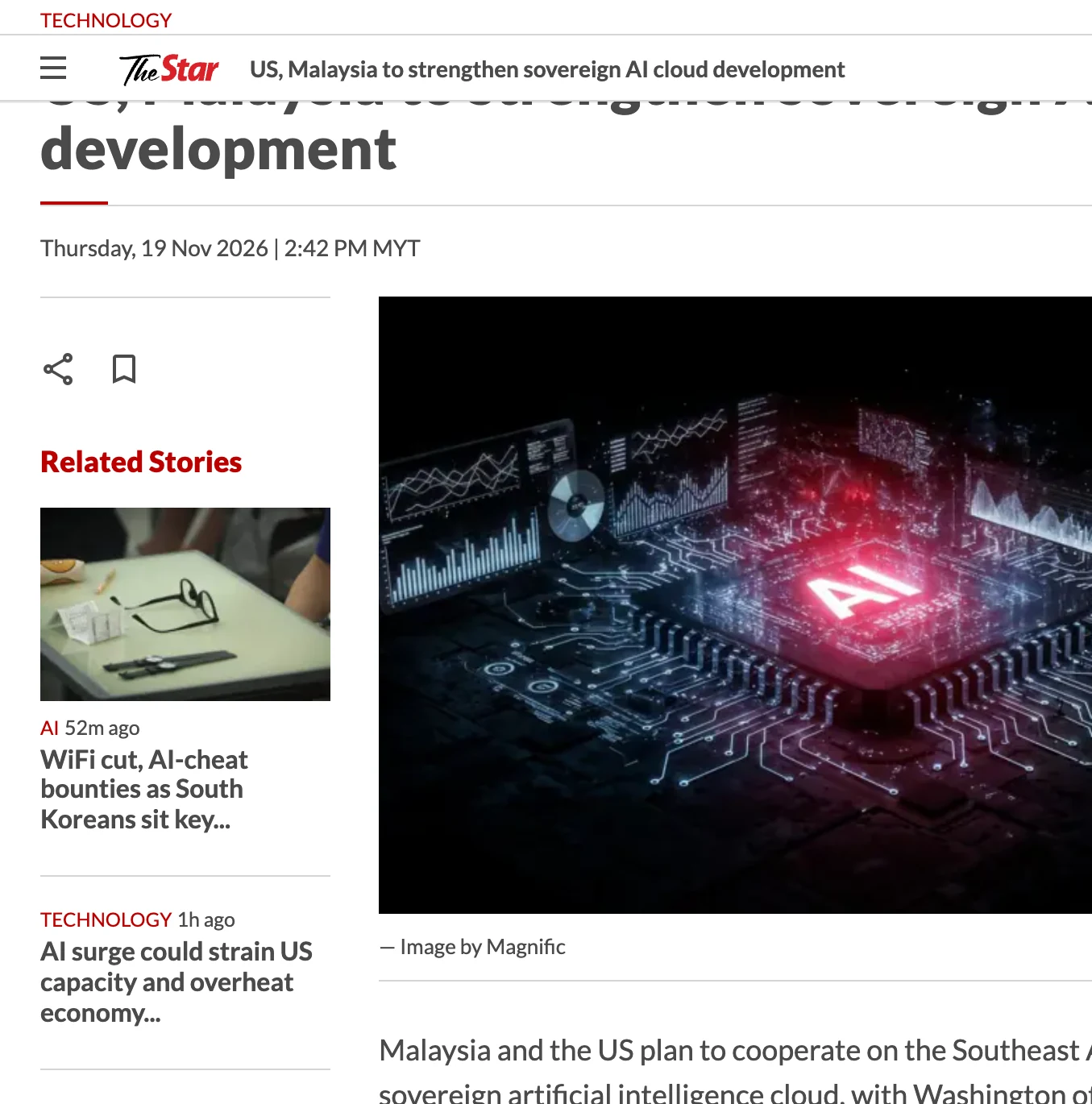
The Star’s report of 19 November 2026, carrying the Bloomberg copy, cropped to the masthead, the headline, the date line and the opening paragraphs. It is also the report that gives the RM2 billion budget figure in its fourth paragraph. Source: The Star, business section, 19 November 2026.
Three things to ask your cloud provider this quarter
- Where the data physically sits. Ask for the region and the facility, and ask whether it is a contractual term or a line on a marketing page.
- Which law governs it. Ask what the provider does when a foreign authority requests access, and get the answer in writing.
- Who can suspend access, and on what notice. A supplier that can switch a workload off for a sanctions review is a different risk from one that cannot.
None of these questions needs the sovereign cloud to exist. A provider that cannot answer them today will not answer them better because a facility has been announced. For a company already running AI workloads on foreign infrastructure, the answers are also the baseline against which any future domestic offer should be judged.
Why the chip file sits inside this story
The offer lands in the same fortnight as a US licence rule for advanced chips that names Malaysia. A separate report on this site sets out the checks a data centre now owes, and the 90-day window attached to remote access. The link is not subtle: Washington is helping to build a trusted cloud while tightening the route its chips travel.
A sovereign cloud running on controlled silicon is a customer of the export regime, not an exit from it. That is the part of this story most likely to decide the timetable, because a facility cannot be procured before the hardware can be licensed.
What could not be verified
The room. Reports disagree about where the two leaders made the announcement. One Malaysian business daily describes a two-day visit to the Philippines while publishing a photograph of both men together in Shenzhen on the same evening. A regional outlet places it at the Manila summit. The regulator’s statement carries a Cyberjaya dateline and a date, and no venue. This page therefore records the date and the statement, not the room.
The budget line. Three sources carry the RM2 billion figure, but none of them is the Bill or the estimates document, and this page’s own reading of the 9 October budget speech found no cost attached to the plan. The figure is therefore attributed to named reports and framed as the 2026 budget, without a ministry code. The reconciliation between the two readings is unresolved.
The consortium. One report says a US consortium will develop the cloud. The regulator says only that US technology companies may take part. No company, lead firm or tender list has been published, so none is named here.
The access terms. No document sets out how a Malaysian company would buy capacity, what it would cost, or whether foreign-owned entities registered here would qualify. Until one does, the commercial question has no answer that can be relied on in a budget.
Sources
- Malaysian Communications and Multimedia Commission, Malaysia dan Amerika Syarikat berhasrat bekerjasama menyokong pembangunan Awan AI Berdaulat Malaysia, Cyberjaya, 18 November 2026 (design, procurement and operations; data custody; SI SPARK and the conditional support) — mcmc.gov.my
- US Mission to ASEAN, The United States’ Participation in the 2026 East Asia Summit, 17 November 2026 (definition of SI; the U.S.-ASEAN SI SPARK programme) — asean.usmission.gov
- Bernama, Malaysia, US To Strengthen Cooperation On Sovereign AI Cloud, 18 November 2026 (the statement in English) — bernama.com
- The Star, US, Malaysia to strengthen sovereign AI cloud development, 19 November 2026, Bloomberg copy (RM2 billion in the 2026 budget; the stated purpose of the facility) — thestar.com.my
- The Edge Malaysia, Malaysia and US seek deeper ties with coal supply deal, sovereign cloud plan, 19 November 2026 (the consortium description; the exchange rate used for the conversion) — theedgemalaysia.com
- AI in Asia, Southeast Asia Races to Build Its Own Sovereign AI Clouds, 5 July 2026 (corroboration that the 2026 budget tasked the regulator with the build) — aiinasia.com
- BD Media, US Chip Licence Risk: What Malaysian Data Centres Must Check, 17 November 2026 (the licence rule and the compliance steps) — media.bigdomain.my
BD Media is the editorial desk of Big Domain. This page records a published government statement, a published US fact sheet and named news reports. It states no operator, no site and no date, because none has been published.