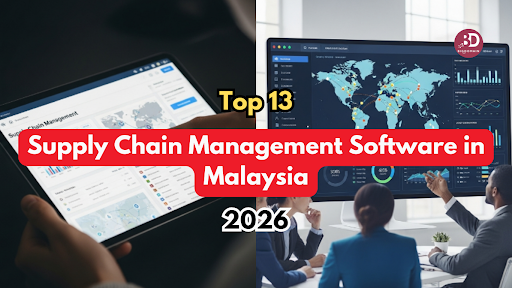
Supply chain management (SCM) is a critical factor for Malaysian businesses aiming to stay competitive in 2026. Modern SCM software streamlines procurement, inventory, logistics, and supplier collaboration while integrating AI-driven insights for smarter decisions. Choosing the right platform can reduce operational costs, improve efficiency, and enhance customer satisfaction.
This guide highlights the Top 13 SCM software solutions in Malaysia, featuring their key capabilities, target users, and benefits.
1. Oracle Cloud SCM
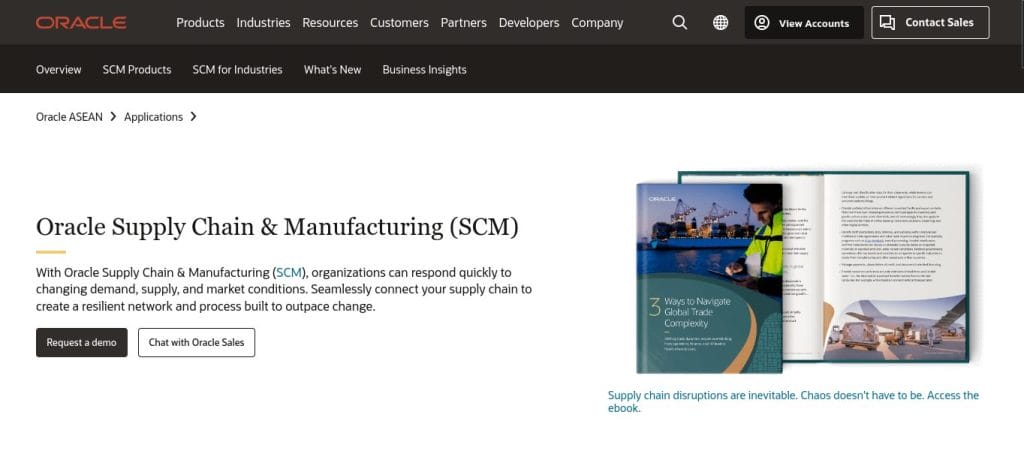
Oracle Cloud SCM is a comprehensive cloud-based platform suitable for large enterprises and complex global operations. It integrates procurement, order management, manufacturing, logistics, and predictive analytics. AI-driven insights help businesses optimize inventory, forecast demand, and automate routine processes, improving operational efficiency.
Key Features: End-to-end SCM, AI forecasting, supplier collaboration, real-time visibility
2. SAP Supply Chain Management

SAP SCM provides integrated planning and execution for manufacturing and multinational companies. Predictive analytics optimize supply networks, reduce bottlenecks, and ensure smooth operations. SAP’s system supports global logistics and offers advanced inventory management tools, making it ideal for large-scale organizations.
Key Features: Inventory optimization, production planning, global logistics support, AI forecasting
3. NetSuite SCM
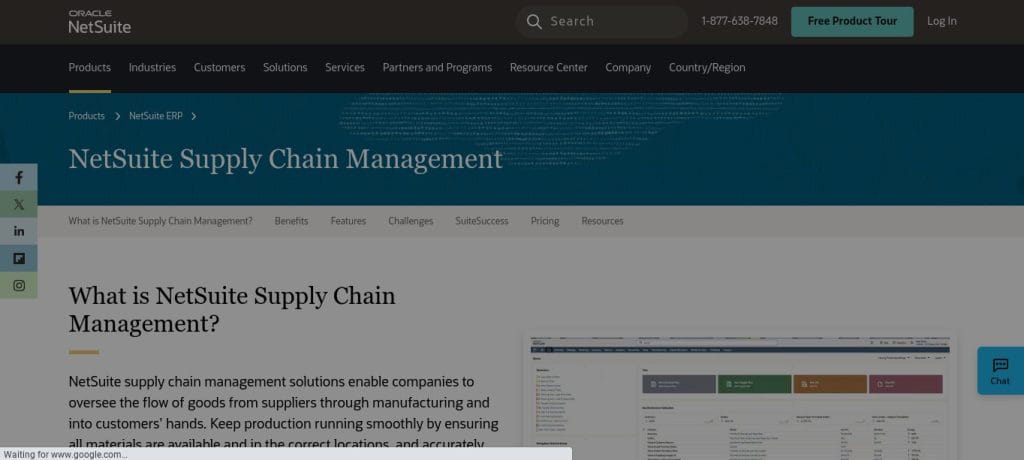
NetSuite is designed for growing mid-sized businesses with multi-location operations. It integrates SCM with ERP, finance, and CRM, giving businesses real-time visibility into inventory, orders, and procurement. NetSuite helps companies respond quickly to market fluctuations and improve operational efficiency.
Key Features: Cloud-based management, multi-location inventory, order tracking, ERP integration
4. HashMicro SCM
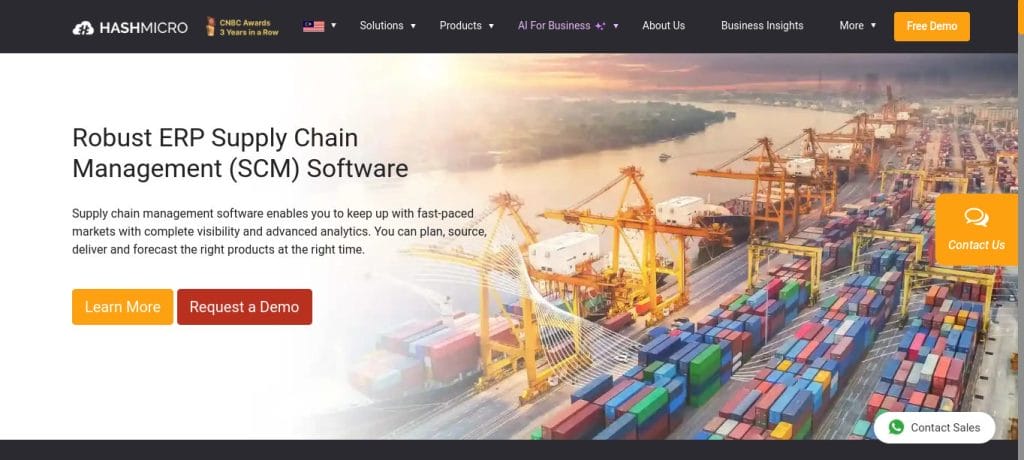
HashMicro provides SCM solutions tailored to Malaysian SMEs. Its intuitive interface and localized support make it easier for small businesses to implement effective supply chain management. The platform covers inventory tracking, procurement automation, and supplier management, helping SMEs scale efficiently.
Key Features: Inventory control, purchase automation, reporting, accounting integration
5. Microsoft Dynamics 365 Supply Chain Management
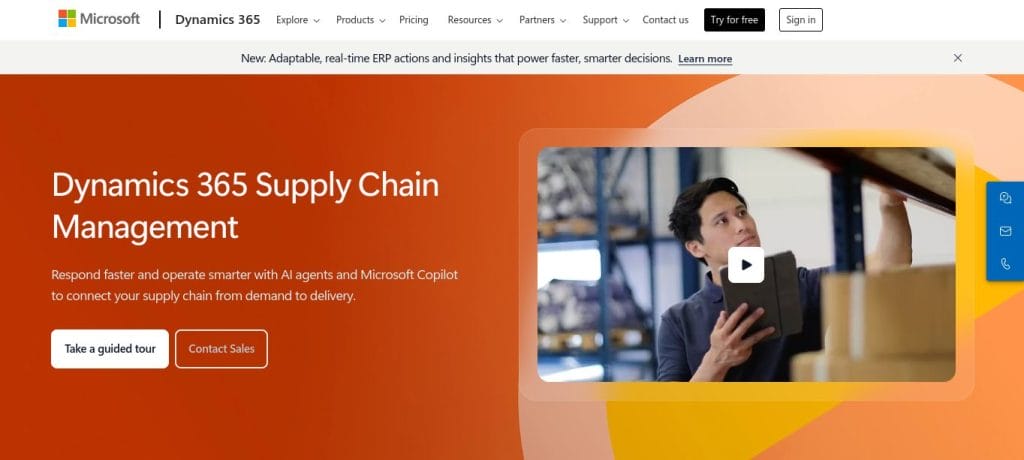
Dynamics 365 offers integrated SCM and ERP for enterprises. It includes warehouse automation, predictive analytics, and real-time dashboards that allow businesses to manage procurement, inventory, and logistics efficiently. AI-powered tools enhance planning and forecasting.
Key Features: ERP integration, warehouse automation, predictive analytics, supplier collaboration
6. Blue Yonder Luminate

Blue Yonder Luminate combines AI-driven planning with real-time execution, making it suitable for retailers and logistics-heavy businesses. Its demand sensing and transportation optimization help companies reduce delays and improve supply chain efficiency.
Key Features: Demand forecasting, transportation management, real-time analytics
7. Infor Nexus

Infor Nexus connects buyers, suppliers, and carriers in a collaborative network. It offers visibility into global supply chains, supplier performance, and compliance, enabling businesses to manage risk effectively.
Key Features: Supplier collaboration, global logistics monitoring, compliance tracking
8. Kinaxis RapidResponse

Kinaxis RapidResponse focuses on agile supply chain planning and scenario modeling. Its “what-if” simulations help businesses quickly respond to disruptions and optimize inventory, production, and distribution plans.
Key Features: Concurrent planning, scenario modeling, real-time dashboards
9. Manhattan Associates SCM
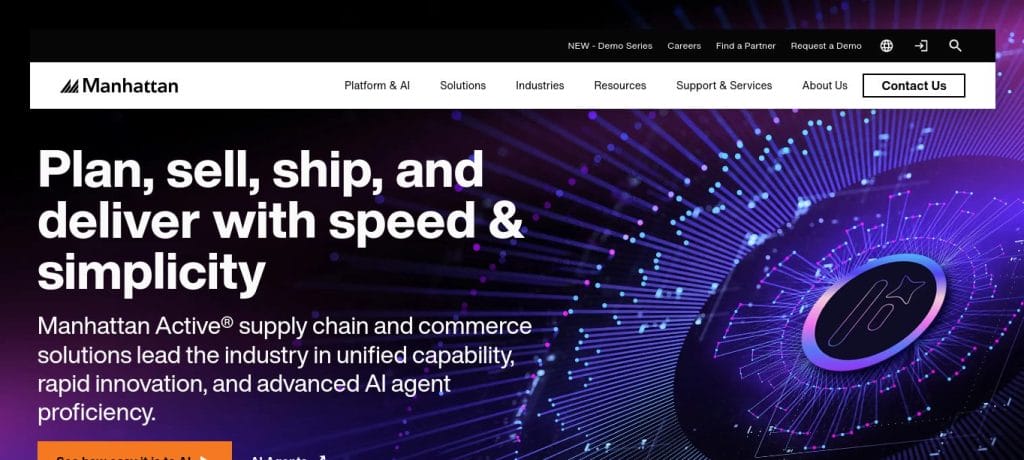
Manhattan Associates provides high-volume logistics and warehouse management solutions. Its automation and predictive analytics improve order accuracy, fulfillment speed, and operational efficiency for large-scale operations.
Key Features: Warehouse automation, order orchestration, logistics optimization
10. Precoro

Precoro is ideal for procurement automation, helping businesses streamline purchase orders, approvals, and invoice management. It improves compliance, reduces manual work, and simplifies supplier communication.
Key Features: PO automation, supplier portal, budget control, invoice tracking
11. Logiwa WMS & Fulfillment
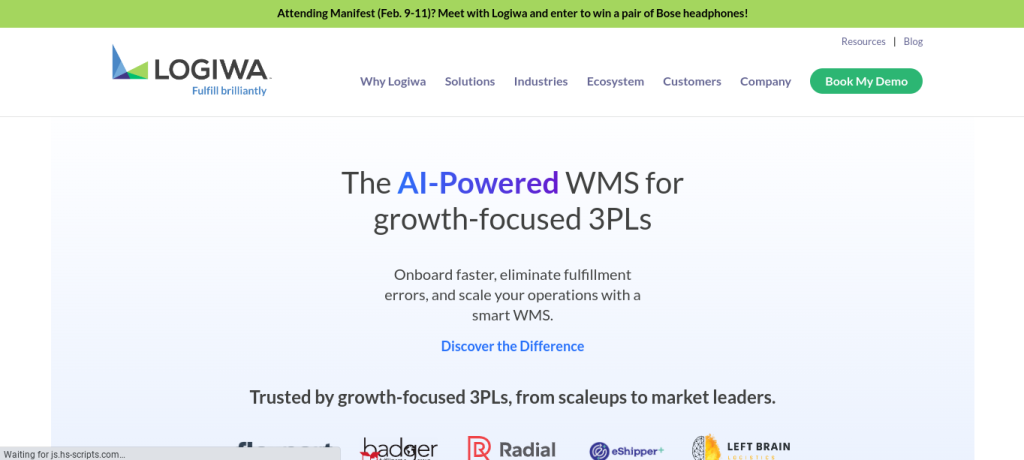
Logiwa is a cloud-based solution for e-commerce and warehouse operations. It supports multi-warehouse management, barcode scanning, and real-time inventory syncing, helping businesses efficiently handle orders and fulfillment.
Key Features: Order fulfillment, barcode scanning, real-time inventory syncing
12. Netstock
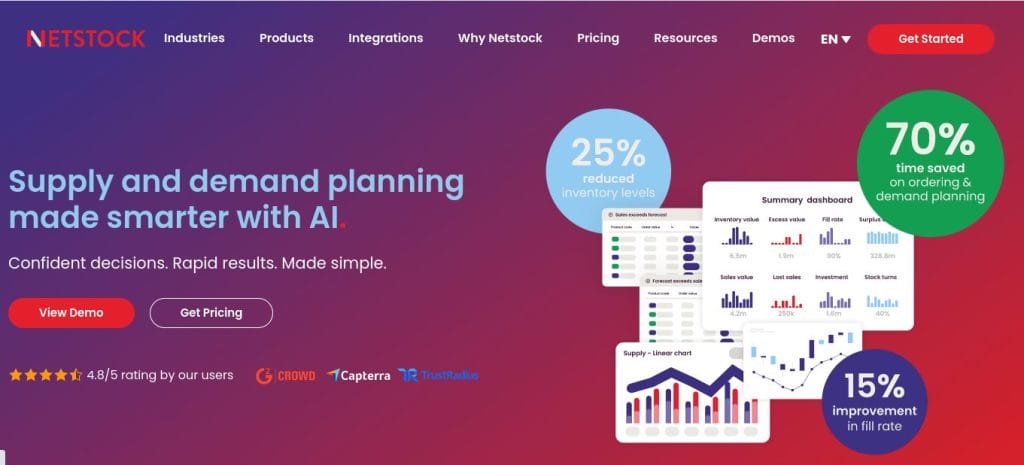
Netstock specializes in inventory optimization. By analyzing demand patterns and automating replenishment, it reduces stockouts and overstock, ensuring businesses maintain optimal inventory levels.
Key Features: Forecasting, automated replenishment, ERP integration
13. TradeBeyond SCM
TradeBeyond provides modular SCM solutions suitable for SMEs. Businesses can choose modules for procurement, inventory, and order fulfillment while benefiting from reporting dashboards for informed decision-making.
Key Features: Modular setup, inventory management, order tracking, reporting dashboards
Comparison Table: Top 13 Supply Chain Management Software in Malaysia 2026
| Software | Best For | Key Strengths | Typical Business Size |
| Oracle Cloud SCM | Large enterprises & complex global ops | End‑to‑end SCM, AI forecasting, real‑time visibility | Large |
| SAP Supply Chain Management | Manufacturing & global businesses | Predictive planning, global logistics | Large |
| NetSuite SCM | Growing multi-location businesses | Integrated cloud ERP + SCM, real‑time data | Mid to Large |
| HashMicro SCM | Malaysian SMEs | Local support, easy adoption, inventory automation | Small to Mid |
| Microsoft Dynamics 365 SCM | Enterprises needing ERP + SCM | Unified data, AI forecasts, warehouse automation | Mid to Large |
| Blue Yonder Luminate | Retail & logistics-heavy companies | Real-time demand sensing, transport optimization | Mid to Large |
| Infor Nexus | Global supply networks | Supplier collaboration, compliance visibility | Large |
| Kinaxis RapidResponse | Agile planning & “what-if” scenarios | Scenario modeling, connected planning | Mid to Large |
| Manhattan Associates SCM | High-volume logistics & fulfillment | Fulfillment optimization, warehouse automation | Mid to Large |
| Precoro | Procurement automation | PO workflows, approvals, spend control | Small to Mid |
| Logiwa WMS & Fulfillment | E-commerce & warehouse ops | Order fulfillment, barcode scanning, syncing | Small to Mid |
| Netstock | Inventory optimization | Automated stock planning, ERP integration | Small to Mid |
| TradeBeyond SCM | Modular SCM foundation | Flexible modules, reporting dashboards | Small to Mid |
AI and Technology Trends in Malaysian Supply Chains
Artificial intelligence is transforming supply chains in Malaysia. Predictive demand forecasting allows businesses to anticipate customer needs and maintain optimal inventory levels. Autonomous planning optimizes procurement and production, while warehouse automation reduces manual errors and improves speed. AI-enabled logistics platforms also enhance delivery accuracy and customer satisfaction. Cloud integration ensures real-time visibility and seamless data across operations.
FAQ – Supply Chain Management Software Malaysia
Q1: What is SCM software?
SCM software helps manage procurement, inventory, logistics, and supplier operations efficiently.
Q2: Why is SCM important for Malaysian businesses?
It reduces costs, improves operational efficiency, enhances customer satisfaction, and ensures timely delivery.
Q3: Can small businesses use SCM software?
Yes, platforms like HashMicro, Precoro, and TradeBeyond are designed for SMEs with affordable pricing and easy implementation.
Q4: Which SCM software is best for large enterprises?
Oracle Cloud SCM, SAP SCM, and Microsoft Dynamics 365 are ideal for complex, multi-location, or global operations.
Q5: How much does SCM software cost in Malaysia?
Costs vary based on features, user count, and deployment type. Cloud solutions often charge monthly subscriptions, while enterprise software may involve licensing fees.