Last updated: 16 September 2026.
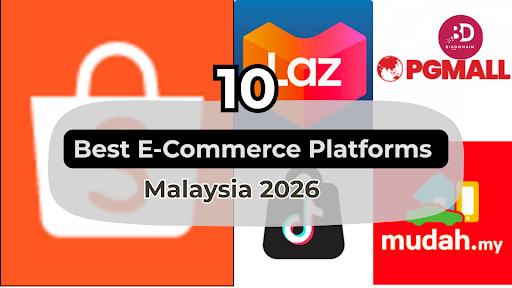
Malaysia’s e-commerce market continues to grow as more consumers shop online and businesses expand their digital presence. In 2026, selecting the right e-commerce platform Malaysia solution is critical for sales performance, logistics support, and customer engagement. Sellers can reach customers through high-traffic marketplaces or create direct-to-customer stores using dedicated platforms, and each option has distinct benefits for different business objectives. Therefore, this guide highlights the best e-commerce platform options in Malaysia to help you decide which ones suit your business strategy and operational needs.
E-Commerce Platform Malaysia: Marketplaces, Classifieds and Store Builders
| Platform | Type | Who it is built for | Where the buyers are |
|---|---|---|---|
| Shopee Malaysia | Marketplace | Sellers who want the largest ready-made audience in Malaysia | Malaysia |
| Lazada Malaysia | Marketplace | Brands that want a verified storefront (LazMall) | Malaysia |
| TikTok Shop | Marketplace (social commerce) | Sellers who can produce video and LIVE content | Malaysia |
| Zalora | Marketplace (fashion) | Fashion, beauty and lifestyle brands | Malaysia |
| PG Mall | Marketplace (local-first) | Malaysian-made products and SMEs | Malaysia |
| Mudah.my | Classifieds | Individuals and dealers who list straight to a buyer | Malaysia |
| Carousell Malaysia | Classifieds | Individuals selling pre-owned or niche items | Malaysia |
| eBay Malaysia | Marketplace (cross-border) | Sellers whose prices are competitive overseas | Mostly outside Malaysia |
| Shopify | Store builder | Brands that want their own storefront and customer data | You have to bring them |
| WooCommerce | Store builder | Businesses that already run a WordPress site | You have to bring them |
1. Shopee Malaysia—Top Traffic and Marketplace Reach

Shopee Malaysia remains one of the top e-commerce platforms in Malaysia with the highest monthly visits among retail sites, offering a strong environment for both local and international sellers. The platform provides seller tools such as analytics, advertising options, and participation in major sales events like 11.11 and 12.12 to boost visibility and conversions. It supports integrated logistics and local payment methods that make checkout simple for customers and order fulfillment easier for sellers. In 2026, Shopee’s marketplace remains the top choice for brands seeking immediate exposure to millions of Malaysian shoppers.
Verified: shopee.com.my was the most-visited retail website in Malaysia in July 2026 with 55.89 million visits, against Lazada Malaysia’s 7.8 million in the same month (Semrush, Top Retail Websites in Malaysia, July 2026). Shopee is operated by Sea Limited. On reach alone, that gap is the whole decision between entries 1 and 2.
2. Lazada Malaysia: A Trusted Marketplace with Brand Features
Lazada Malaysia continues to be a leading online marketplace known for its broad product range and strong logistics support across the country. The platform’s LazMall section highlights verified premium products, assisting brands in establishing trust with buyers looking for genuine goods. Multiple payment methods and fast delivery services boost buyer confidence and reduce cart abandonment. In 2026, Lazada remains a popular e-commerce platform in Malaysia for businesses looking for nationwide reach and structured seller support.
Verified: Lazada Malaysia’s own homepage describes the site as “The Leading Online Shopping Mall in Malaysia”, and LazMall is the section reserved for verified premium stores (lazada.com.my, opened 16 September 2026). Its Malaysian traffic was 7.8 million visits in July 2026, down 35.91% year on year (Semrush, July 2026) – so “broad product range” is true, but the reach is now roughly a seventh of Shopee’s, not a peer of it.
3. TikTok Shop—Social Commerce with High Engagement

TikTok Shop distinguishes itself as a social commerce platform in which sellers promote products through entertaining short videos and live streams that engage buyers. This format is popular with younger audiences such as Generation Z and millennials, who prefer interactive content before making a purchase. Sellers benefit from organic discovery because TikTok’s recommendation system recommends engaging product videos to users. For brands selling visual or trend-driven products, TikTok Shop’s format helps increase product visibility and conversion rates without heavy advertising spend.
Verified: TikTok Shop launched in Malaysia in early 2022 and had passed one million sellers and 1.7 million affiliate creators by December 2023 (The Star, 28 December 2023). It is a discovery channel rather than a search channel, which is what the copy above means by “organic discovery”: the product has to earn attention from a video instead of answering a search. Our TikTok SEO guide for Malaysia covers the search layer that sits under that.
4. Shopify—Branded Store Ownership
Shopify is a global e-commerce platform that allows Malaysian sellers to create their own branded online store with complete control over the customer experience and data. The platform includes built-in inventory management, payment, and marketing tools, as well as support for local payment gateways suitable for Malaysian buyers. Shopify allows businesses to scale from small setups to multi-channel operations, linking with marketplaces or social platforms. For brands that want direct relationships with customers and full ownership of their online store, Shopify remains an essential e-commerce platform in Malaysia in 2026.
Verified: Shopify describes itself as “the all-in-one commerce platform for businesses” (shopify.com, opened 16 September 2026). It is a paid subscription, and it is not a marketplace – nobody arrives at a Shopify store unless the seller sends them there. That makes it the opposite choice to entries 1 to 3, not a better or worse one.
5. WooCommerce—Flexible Custom Store Integration

WooCommerce, a plugin for WordPress, lets sellers build online shops on their existing websites with extensive customization options. This platform appeals to small and medium enterprises that want deep control over design, search engine optimization, and product presentation while avoiding marketplace constraints. WooCommerce integrates with local shipping and payment services to streamline checkout for Malaysian shoppers. While it requires hosting and setup efforts, WooCommerce provides flexibility for businesses focused on long-term brand growth and search visibility.
Verified: WooCommerce is an open-source plugin installed on a seller’s own WordPress site; its own site calls it “the most flexible ecommerce platform” (woocommerce.com, opened 16 September 2026). It brings no shopper audience with it, so the traffic problem stays yours. Our SEO agency comparison for Malaysia is where that problem gets solved.
6. PG Mall—Malaysian Marketplace with Local Focus

PG Mall promotes local products and sellers through a Malaysian-based marketplace that focuses on homegrown offerings and community support. The platform includes loyalty programs and promotional features to reward customers and help sellers build repeat business. Sellers on PG Mall benefit from lower initial costs and tools for product management, making it attractive for small brands targeting local markets. For businesses targeting customers who prioritize Malaysian products, PG Mall remains a solid e-commerce platform choice in Malaysia in 2026.
Verified: PG Mall is run by PG Mall Sdn Bhd, established in 2017, backed by Public Gold Group, and described at launch as Malaysia’s first home-grown online marketplace, set up to promote locally manufactured products (The Malaysian Reserve, 7 August 2017; Smart Investor, March 2019). The “homegrown offerings” claim above is the company’s founding purpose, not a marketing line added later.
7. Mudah.my—Local Listings and Classifieds Marketplace

Mudah.my serves as Malaysia’s most visited local classifieds platform, giving buyers and sellers a space to transact products directly, from electronics to vehicles and everyday items. Its simple interface lets sellers list products quickly without complex setup steps, making it ideal for individuals or casual sellers. While not a traditional marketplace like Shopee or Lazada, Mudah plays a distinctive role in the Malaysian e-commerce ecosystem by supporting person-to-person transactions and local deals. Sellers who prioritize quick listings and local reach often choose this platform to expand their audience.
Verified: Mudah.my has been part of the Carousell group since 2019, when Carousell merged with Telenor’s 701Search business that operated it (Bernama, 21 November 2019). It calls itself “Malaysia’s Largest Marketplace” and lists cars, motorcycles, property, phones and jobs with free listings rather than a checkout (mudah.my, opened 16 September 2026) – which is why the copy above calls it “not a traditional marketplace”.
8. Carousell Malaysia—Mobile-First Marketplace
Carousell Malaysia focuses on mobile commerce, allowing sellers to easily list products using photos and descriptions within a user-friendly app. This platform is ideal for sellers of preowned and niche products because it connects them with buyers who are actively browsing on mobile. Its in-app payment and messaging features help build trust and streamline transactions between buyers and sellers. For small businesses and individual sellers looking for straightforward tools and local engagement, Carousell remains a relevant e-commerce platform solution in Malaysia.
Verified: carousell.com.my drew 1.51 million visits in July 2026 (Semrush, July 2026), under 3% of Shopee Malaysia’s traffic that month. Semrush records 58.99% of those visits as desktop, the highest desktop share of the three Malaysian marketplaces on that table – a complication for the “mobile-first” label in the heading above.
9. Zalora—Fashion and Lifestyle Marketplace

Zalora focuses on fashion, beauty, and lifestyle categories, offering a curated shopping experience for Malaysian customers looking for apparel and accessories. Its platform features collections from both local and international brands, as well as quick delivery and easy returns. Businesses that specialize in style and lifestyle products use Zalora to reach a targeted audience with higher conversion potential due to the platform’s focused user base. For fashion and beauty brands seeking specialized sales channels, Zalora remains among the top e-commerce platforms in Malaysia.
Verified: Zalora was founded in 2012 and is part of Global Fashion Group; its regional e-fulfilment hub is in Malaysia and holds about seven million items, and its inventory is now connected across its Malaysia, Indonesia and Philippines centres (Zalora Group, About Us; Zalora press release, May 2025). It is the only entry here whose traffic arrives for a single category.
10. eBay Malaysia—Global Marketplace Access

eBay Malaysia connects local sellers with global buyers via auctions and fixed-price listings, providing access to both international demand and local market opportunities. The platform supports cross-border transactions, allowing sellers to expand beyond Malaysia without having to open foreign stores. Schools, niche collectors, and small businesses benefit from eBay’s large user base and versatile selling formats. eBay provides sellers with access to customers outside of Malaysia, broadening their e-commerce strategy.
Verified: eBay’s Malaysian seller pages are live and describe a cross-border model, not a domestic one: a seller must be identity-verified before listing internationally, and that verification for Malaysia is handled by a Malaysia-specific eBay team (pages.ebay.com.my, opened 16 September 2026). The buyers for an eBay Malaysia listing sit mostly outside Malaysia – the reverse of every other entry on this page.
Marketplace or Store Builder? The Question That Decides It
The ten entries above are not ten versions of the same thing. Six are marketplaces that already have shoppers inside them, two are classifieds where a buyer contacts you directly and pays you outside the platform, and two are store builders that hand you a shopfront and no audience at all. Choosing between them is not a quality ranking; it is a question about where your customers already are.
If your product is something people search for by name, a marketplace puts you in front of demand that already exists, and charges you a commission and the customer relationship for it. If your brand is the reason people buy, a store builder lets you keep the margin and the data, but you fund every visit yourself. Most established Malaysian sellers end up running both: the marketplace as the demand channel, the branded store as the retention channel.
Whichever route you take, the back office is the same. We cover the compliance layer in our list of e-invoicing software for Malaysian SMEs, and the shipping layer in our comparison of supply chain management software in Malaysia.
How to Select the Right E-Commerce Platform
Choosing the best e-commerce platform in Malaysia depends on your business goals, product types, and marketing strategy. Marketplaces like Shopee and Lazada give you immediate access to millions of ready buyers and integrated logistics, while platforms like Shopify and WooCommerce provide control over customer data and branding. A multi-channel strategy that includes marketplaces and a branded store can balance traffic, conversion, and long-term customer retention. Compare fees, seller tools, and customer engagement features to match the platform with your operational needs and growth plans.
Conclusion
Malaysia’s digital economy continues to create strong opportunities for online sellers in 2026. Each e-commerce platform in Malaysia offers different strengths, from high-traffic marketplaces like Shopee and Lazada to branded store solutions such as Shopify and WooCommerce. Social commerce platforms like TikTok Shop also reshape how businesses engage customers through content-driven selling.
To succeed, sellers need to align platform choice with their product category, pricing strategy, and long-term brand goals. Some businesses place a premium on immediate exposure and logistics support, whereas others prioritize customer data ownership and branding. Evaluating fees, tools, audience reach, and scalability helps to ensure long-term growth. Businesses can increase visibility, improve conversion rates, and compete effectively in Malaysia’s growing e-commerce market by combining the right platforms.