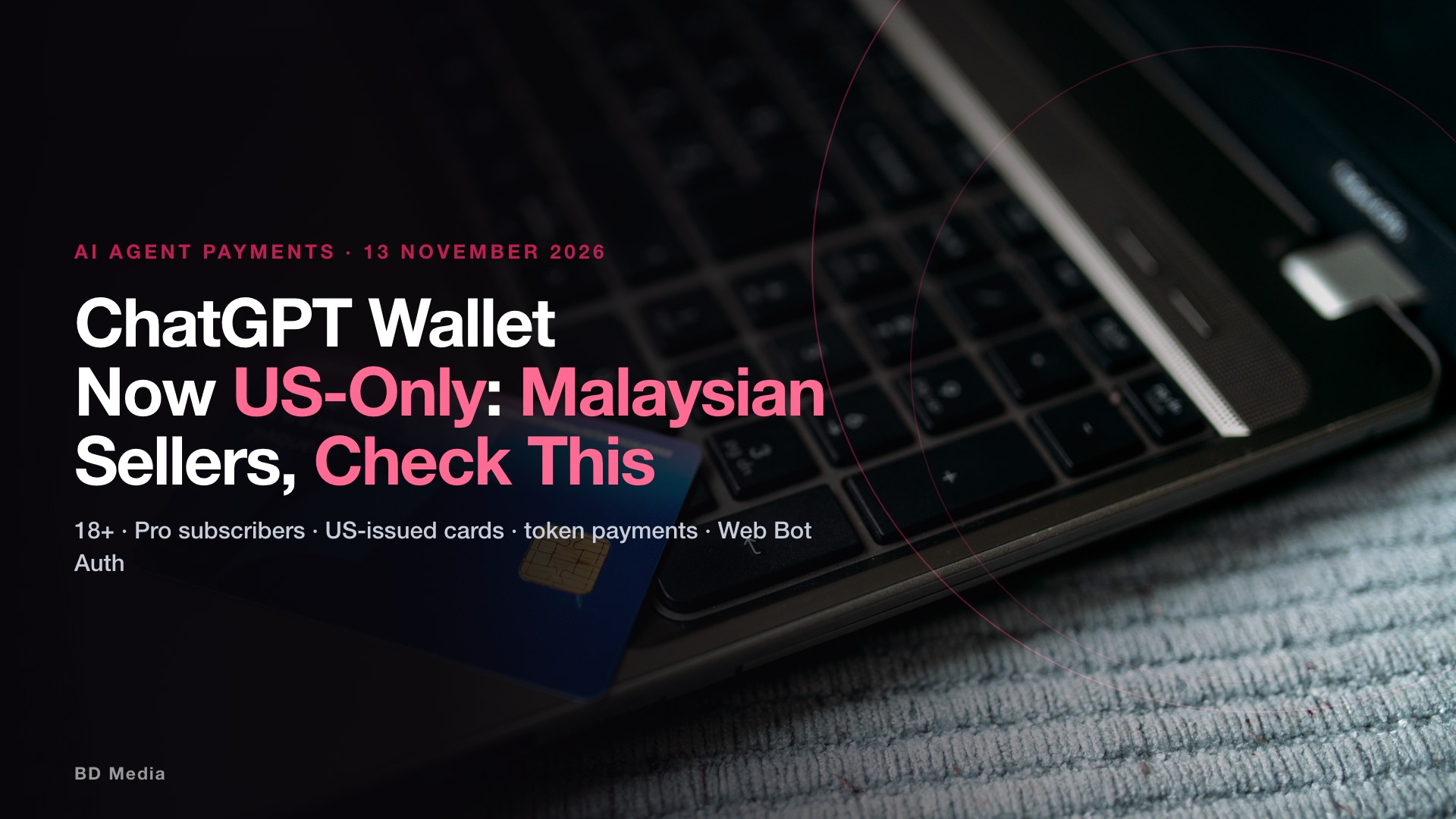
ChatGPT Wallet is a US-only product for ChatGPT Pro subscribers aged 18 and over. Malaysian shoppers cannot use it today. A Malaysian seller who ships to the US may still feel it first: an agent acting for a US customer can reach the seller’s existing checkout and place an order, and the store’s bot rules or payment risk settings may refuse it before the failure becomes visible. That is the reason to read this now, and it is the only reason this story is on a Malaysian business desk.
OpenAI published the announcement on 13 November 2026. It describes a wallet that begins rolling out through dots, the company’s persistent agents, and gives them a way to pay without handling the user’s actual card details. The merchant checklist published alongside it is the part that travels: product data, agent access, and payment-risk recognition.
Last updated: 17 November 2026. This article reports what OpenAI published on 13 November, what independent reporting added, and what we could not verify. It is a technical explainer, not legal or payment advice.
What ChatGPT Wallet changed on 13 November: what sellers must check
OpenAI says ChatGPT Wallet began rolling out on 13 November 2026 in dots, letting a user’s agent complete purchases on their behalf. The company frames the launch as deliberately narrow and says it will work with businesses, banks and payment networks on compatibility. Its announcement names American Express, Chase, Mastercard and Visa as launch partners.
Four conditions travel together: the United States, age 18 and over, an active ChatGPT Pro subscription, and an eligible US-issued card. Rollout is gradual rather than a switch-on for every eligible account. OpenAI also says it is starting small to learn from real use.
OpenAI reports that 1.2 billion people use ChatGPT each week. That is a company-reported figure, not an independently measured one, and it is not a count of Wallet users. No number of eligible or active Wallet accounts was published.
For context on where this sits in the wider market, see the wider shift from B2B to A2A commerce. Wallet is one product inside that shift, not the shift itself.
Can Malaysians actually use ChatGPT Wallet?
No, not at launch. OpenAI’s stated availability is US ChatGPT Pro subscribers aged 18 and over with eligible US-issued cards. The announcement names no other country and gives no expansion date. It says only that OpenAI expects to work with businesses, banks and payment networks to improve compatibility, and that wider availability is a goal.
Independent reporting is consistent on the limit. The Verge reported on 13 November 2026 that the rollout starts with US Pro subscribers aged 18 and older, and that a US billing address is also required. TechCrunch reported the same day that access is limited to a small group of US Pro subscribers. Because OpenAI’s own announcement does not state a billing-address condition, this article records that claim only as secondary reporting and does not treat it as OpenAI’s stated rule.
What follows for a Malaysian business is narrower and more useful. A customer’s agent does not need the customer to be in Malaysia, or the merchant to be in the US. Where a store accepts orders from US buyers, an agent-placed order is operationally just an order arriving through the normal checkout. Nothing has to be switched on to receive one. The store may, however, already be configured to reject it.
How the token and biometric approval work
The flow has five steps, and the user stays in the loop at the last one. OpenAI’s own description sets out the sequence:
- The user adds a card once. It does not have to be re-entered for each purchase.
- The agent finds products and assembles the purchase.
- Before checkout, the user sees the items, the total and the chosen card.
- A security check such as Face ID or a fingerprint approves that specific purchase.
- The payment network issues a payment token with a card number, security code and expiration date. The charge goes to the selected card.
The token is the point of the design. OpenAI states that the user’s actual card details are not shared with the business or the agent. TechCrunch reported that the merchant still receives what it needs to fulfil the order, such as the shipping address and contact information. Users keep their existing card rewards and protections for eligible disputes with businesses; OpenAI gives a defective item as its example.
OpenAI also says users transact directly with businesses, which keep their customer relationships and control over pricing, fulfilment, returns and customer service. Nothing in the announcement transfers that responsibility to OpenAI or to the agent. A mistaken order is still, operationally, an order the store has to handle.
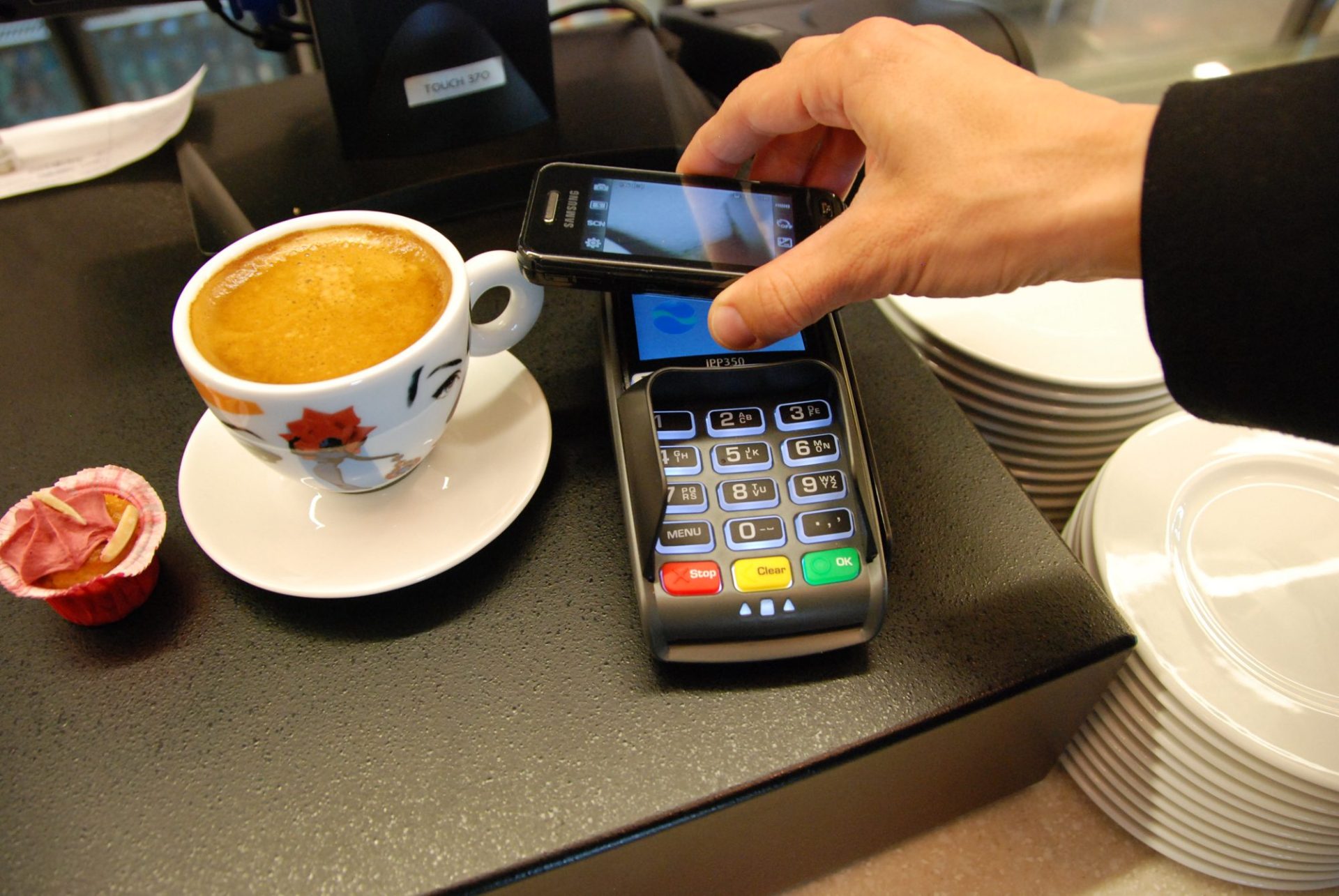
Contactless payment at a physical till — the checkout pattern agent payments must fit into. Photo: HLundgaard, Wikimedia Commons, CC BY-SA 3.0, captured 17 November 2026.
Why a store may block an agent buyer
This is the failure most likely to reach a Malaysian merchant first, and it can happen without anyone changing a setting. OpenAI states plainly that some sites may unintentionally block purchases through ChatGPT Wallet or other agentic payment products. An agent browsing a catalogue looks, to a firewall, a lot like a bot.
The company’s guidance is specific. Site owners should configure their CDN or firewall to recognise signed requests using Web Bot Auth, then confirm that general security rules are not inadvertently blocking agents. Web Bot Auth is an IETF-draft-based method of authenticating automated traffic with cryptographic HTTP message signatures rather than user-agent strings or IP ranges. Cloudflare’s Web Bot Auth documentation describes how a signed bot registers a public key directory and attaches signatures to requests. For a merchant behind a CDN, the practical question is whether that CDN or WAF already recognises the signature.
Three places are worth checking: a bot-management rule that blocks unknown automated browsers; a rate limit that treats an agent’s product-page visits as scraping; and a country or region rule that catches the network the agent uses rather than the customer. Any one of them can turn a valid order into a silent failure.
If you sell to the US, check these
OpenAI published a Commerce Partner Playbook alongside the launch. It is aimed at businesses that want customers using agents to reach their existing website and systems. Four items matter most.
- Claim your business in ChatGPT. Once verified, update the business details and upload a product feed with current pricing and availability.
- Check agent access. Look at CDN and firewall rules for signed requests using Web Bot Auth, and confirm general security measures are not blocking agents.
- Talk to your payment and risk providers. Wallet’s payment tokens work with existing checkout flows, but the risk system can still flag a legitimate agent purchase.
- Consider the optional extras. OpenAI says businesses can build a plugin, or add WebMCP tools, to let agents check availability and manage carts. Browser access does not require a plugin or product feed.
That last point is important for a smaller store. The feed and the plugin are discoverability improvements, not a gate on whether an agent can reach your site at all. If your catalogue is complete and your checkout works, the more urgent work is making sure the buyer is not refused on arrival. Our guide to ChatGPT Shopping for WooCommerce stores covers the product-data side in more detail.
Why risk systems decline legitimate agent orders
A payment token solves the problem of exposing card details. It does not solve the problem of a fraud model deciding that this checkout looks unusual. OpenAI names the friction directly: “risk systems may still flag legitimate purchases made by agents, leading to declines or cancellations.”
The company says it is working with fraud prevention providers including Forter, Riskified, Sardine and Signifyd, and payment service providers including Adyen, Checkout.com and Stripe, to help their systems recognise legitimate agent purchases. For a merchant, the useful action is not to assume the provider is already tuned. The question to put to the provider is how these transactions are identified, and how a declined or cancelled agent order appears in settlement reports.
There is a customer-service consequence too. Because the business keeps the customer relationship, the support ticket lands with the merchant. A practical first step is a ticket tag for orders a customer says an agent placed. That tag separates discovery failures, bot filtering and payment-risk declines before any refund discussion begins. This is the operational face of agentic commerce arriving at a normal checkout.
ChatGPT Wallet vs x402 vs ChatGPT Ads: three different things
These names are being discussed in the same breath, and they are not the same layer. Confusing them leads to the wrong fix.
| Name | What it is | What a merchant actually does |
|---|---|---|
| ChatGPT Wallet | A consumer payment product from OpenAI, announced 13 November 2026. | Check product feed, agent access and payment-risk handling. |
| x402 | A protocol idea around the long-dormant HTTP 402 Payment Required status code. A layer beneath products. | Understand it as a standard, not as a wallet to install. See how x402 handles agent payments at the protocol level. |
| ChatGPT Ads | An advertising surface inside ChatGPT. It is about discovery, not paying. | Think about placement and measurement, not checkout. See what ChatGPT Ads means for Malaysian businesses. |
Three separate mechanisms. A Wallet failure is a checkout and access problem; an x402 question is a protocol question; an Ads question is a marketing question. Source: OpenAI (13 November 2026) and BD Media’s x402 and ChatGPT Ads coverage.
The distinction matters because the fixes do not overlap. Updating a product feed will not repair a declining risk model. Reading about x402 will not reveal whether a store’s firewall blocks a signed agent request.
A checklist for WooCommerce, Shopify and EasyStore
The storefront software changes the buttons; the checks do not. Work through these on any store that takes orders from US buyers.
- Confirm the catalogue feed, if you use one, carries current price and stock. Stale price data is the fastest way to an agent-placed order you cannot honour.
- Confirm your CDN, WAF or bot filter recognises signed agent traffic. Ask the provider which rule category it uses, rather than guessing from the user-agent string.
- Ask your payment gateway and fraud vendor how a Wallet token purchase appears, and whether their rules treat it differently from a card-not-present order.
- Check that return, delivery and contact details are readable by an agent without a login, because the merchant receives them from the agent at checkout.
- Make sure your support team can distinguish an agent-placed order from a customer typo before it reaches a refund conversation.
- Re-run these checks after any CDN, WAF or fraud-rule change. The failure mode is accidental, so it can return without a deployment on your side.
Three practical notes for the platforms named here. On WooCommerce, the plugin and feed options are the ones most likely to be half-configured, so start there. On Shopify, check app-level bot protection as well as the platform default. On EasyStore, confirm with support which bot and fraud rules sit behind the storefront before you assume the default is permissive. None of this requires a US entity or a new payment integration; OpenAI states that Wallet payments work with existing checkout flows.
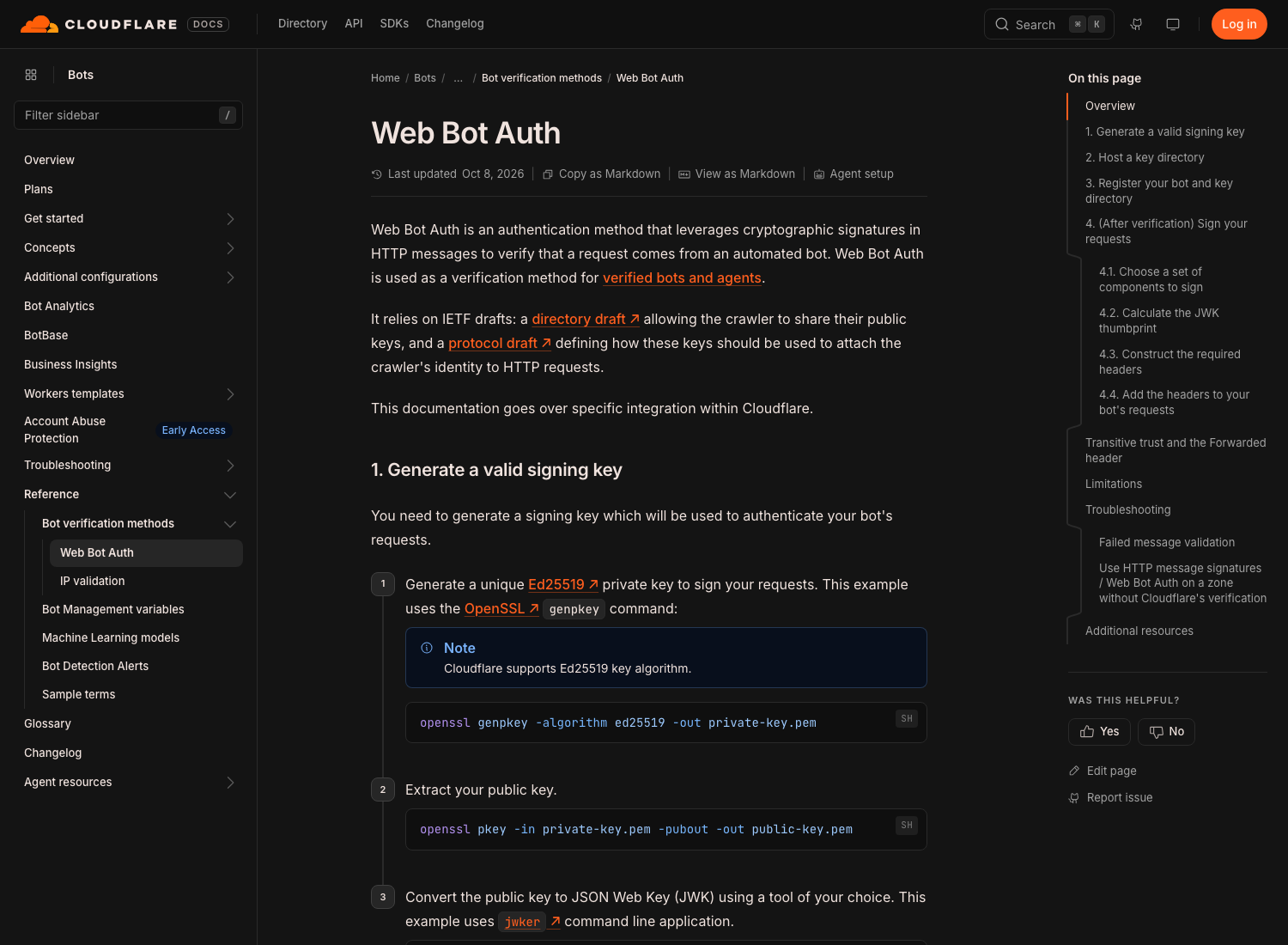
Cloudflare’s Web Bot Auth reference describes cryptographic HTTP message signatures for verifying bot identity. Source: Cloudflare developer docs, read 17 November 2026.
What we could not confirm
Several questions that sellers are asking do not have published answers in OpenAI’s announcement. We are not filling the gaps with inference.
- Fees or commissions. OpenAI’s announcement does not state a transaction fee, a merchant fee or a commission rate. Secondary reports have claimed an introductory no-fee period; we could not confirm that from the primary source and do not report it as fact.
- Dispute and refund responsibility. The announcement says users keep protections for eligible disputes and transact directly with businesses. It does not set out a detailed allocation of liability for agent-placed orders.
- A Malaysia launch date. None was published. OpenAI describes intentions to expand, with no timetable.
- A billing-address requirement. The Verge reports one, but OpenAI’s announcement states only US, 18+, Pro and eligible US-issued cards. We print the difference without resolving it in OpenAI’s favour.
- Scale. No count of participating merchants, active Wallet users or failed agent purchases was published.
What to watch next
Three developments have no published date, and none should be treated as scheduled. First, any expansion beyond the US, for which OpenAI gives no date. Second, the promised controls that would let a user set spending limits, purchase categories or time periods and pre-approve purchases; OpenAI describes this as an expectation, not a launch feature. Third, updates to the Commerce Partner Playbook and to the fraud and CDN providers’ handling of signed agent traffic, because that is where a merchant’s actual exposure changes.
For a Malaysian team weighing where agent tooling fits in a budget, our guide to how Malaysian teams compare AI costs per task is the useful companion. The immediate question here is smaller: will the store accept the order when it arrives?
Sources
- OpenAI, Introducing ChatGPT Wallet, 13 November 2026 (launch date; availability; token and biometric approval; Commerce Partner Playbook; Web Bot Auth; risk providers; customer relationship) — openai.com/index/introducing-chatgpt-wallet
- The Verge, report on ChatGPT Wallet and Dots agent purchases, 13 November 2026 (availability; secondary billing-address claim; retailer blocking) — theverge.com, 13 November 2026
- TechCrunch, report on ChatGPT Wallet and agent checkout, Sarah Perez, 13 November 2026 (limited US rollout; token; merchant receives shipping and contact data; future spending limits) — techcrunch.com, 13 November 2026
- Cloudflare Developer Docs, Web Bot Auth (cryptographic verification of automated traffic; key directory and signed requests) — developers.cloudflare.com/bots/reference/bot-verification/web-bot-auth
- SE Ranking, DATA_getKeywordsMetrics, source MY, measured 17 November 2026 (three candidates returned no data;
chatgpt malaysia4,400) — internal SEO record, see meta.jsondemandblock - Cover photograph: Bank card on laptop closeup.jpg by Shixart1985, own work, via Wikimedia Commons, licensed CC BY 2.0 — commons.wikimedia.org/wiki/File:Bank_card_on_laptop_closeup.jpg. Composed into the cover by BD Media; cropped and overlaid with text.
BD Media is the editorial desk of Big Domain. This article is a technical and commercial explainer based on OpenAI’s published announcement and named reporting. It is not legal or payment advice. Where a claim could not be confirmed from a primary source, the article says so.